SEO, Search Engine Optimization, is the most powerful long-term strategy in digital marketing. If you’ve ever wondered why some websites appear at the top of Google while others get no traffic at all, the answer is almost always SEO. Google, Bing, and AI-powered search engines process billions of queries every day — and businesses that understand SEO capture that traffic for free, while others pay endlessly for ads just to stay visible.
I’ve worked with websites in a variety of industries, and I’ve witnessed companies spend thousands of dollars on advertising, content production, and web design just to find out that potential clients can’t find them online. . That’s where SEO changes everything.
SEO is no longer just about ranking a page on Google. AI Overviews, ChatGPT suggestions, Gemini responses, voice search, and answer engines that pull data straight from reliable websites are all part of today’s search environment. These days, GEO (Generative Engine Optimization), AEO (Answer Engine Optimization), and AI search optimization intersect with modern SEO
Whether you’re a freelancer, blogger, marketer, business owner, or total novice, knowing SEO may help you draw in targeted traffic, raise brand awareness, produce leads, and establish long-term authority.
Everything you need to know about SEO is included in this guide, including how it operates, why it matters, ranking considerations, optimization techniques, typical errors, and upcoming trends that will influence search in 2026 and beyond.
What Is SEO?
The process of making a website better for search engines to comprehend, index, and rank its content is known as search engine optimization, or SEO.
Increasing visibility in organic search results and drawing in quality visitors without paying for each click is the straightforward objective of SEO.
Search engines try to offer the most helpful response when a user looks for information, goods, or services online. Your website can become that solution with the use of SEO.
What Does SEO Stand For?
SEO stands for Search Engine Optimization, the practice of optimizing your website so search engines like Google, Bing, and AI-powered platforms can find, understand, and rank your content.
Each word in the acronym matters:
- “Search” refers to the search engines and the billions of queries users type every day
- “Engine” refers to platforms like Google, Bing, Yahoo, and now AI tools like ChatGPT and Gemini
- “Optimization” refers to the process of improving your content, structure, and authority so search engines prefer your page over competitors
Search remains one of the highest intent sources of traffic available to any business. Think about the difference:
Someone browsing social media isn’t actively looking for anything specific. But a person searching for “best CRM software for small businesses” already has a problem and is actively looking for a solution making them significantly more likely to become a paying client.
That is the power of SEO.
Key Benefits of SEO for Your Business
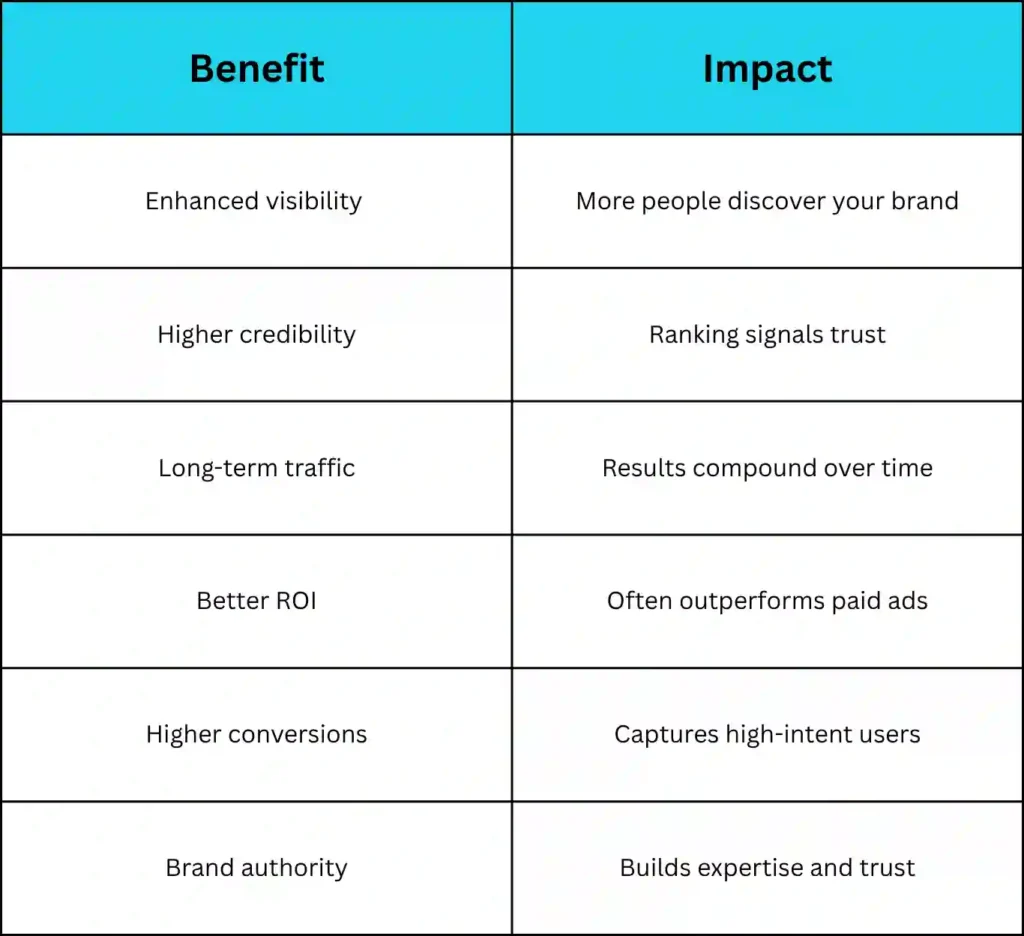
Unlike paid ads that stop delivering the moment you stop spending, SEO compounds over time. A well-optimized article published today can continue driving targeted traffic for months or even years, making it one of the highest ROI marketing investments for any business.
How Search Engines Work
It’s critical to comprehend how search engines function before studying optimization strategies.
The majority of search engines use three main phases:
Crawling
To find content on the internet, search engines employ automated bots known as crawlers or spiders, as Google explains in its Search Central documentation.
By tracking links between pages, these bots discover new content.
A page has little chance of ranking if search engines are unable to crawl it.
Indexing
Once content is discovered, search engines analyze and store information within massive databases called indexes.
During indexing, search engines attempt to understand:
- Page topics
- Content quality
- Keywords
- Media
- Structured data
- User value
Pages not indexed cannot appear in search results.
Ranking
After indexing, algorithms determine where content should appear for specific searches.
Ranking systems evaluate hundreds of factors to decide which pages deserve top positions.
How SEO Has Changed Over the Years
Over the past 20 years, SEO has seen significant change.
Early SEO
Years ago, websites could rank by:
- Stuffing keywords
- Buying backlinks
- Publishing thin content
These tactics often worked.
Today they can trigger penalties.
Modern SEO
Current SEO focuses on:
- User experience
- Expertise
- Content quality
- Search intent
- Trustworthiness
- Technical performance
Search engines have become significantly better at understanding context and meaning.
Understanding Search Intent
One of the biggest SEO mistakes I see is targeting keywords without understanding intent.
Search intent is the term used to describe the goal of a search query.
Informational Intent
Users seek information.
Examples:
- What is SEO
- How does SEO work
- SEO guide for beginners
Navigational Intent
Users seek a specific website.
Examples:
- Google Search Console
- YouTube
- Amazon
Commercial Investigation
Users compare options before buying.
Examples:
- Best SEO tools
- Ahrefs vs Semrush
- SEO software reviews
Transactional Intent
Users are ready to act.
Examples:
- Buy SEO software
- Hire SEO consultant
- SEO agency near me
Knowing intent makes it easier to produce content that meets user expectations.
The Three Main Pillars of SEO
Successful SEO relies on three major areas:
1. On-Page SEO
Optimizing content and site elements is the main goal of on-page SEO. .
This includes:
- Titles
- Headings
- Keywords
- Internal links
- Images
- User experience
Effective on-page optimization aids search engines in determining the relevancy of a page.
Important On-Page SEO Elements
Title Tags
Title tags often influence click-through rates.
A strong title should:
- Include target keywords
- Remain compelling
- Stay under recommended length
Meta Descriptions
Meta descriptions increase click-through rates even though they are not a direct ranking factor.
Header Structure
Proper H1, H2, H3, and H4 organization improves readability and topical understanding.
Content Optimization
Effective content optimization involves:
- Covering topics comprehensively
- Addressing user questions
- Adding examples
- Increasing the readability
- Exhibiting proficiency
2. Off-Page SEO
Off-page SEO refers to activities outside your website that influence rankings.
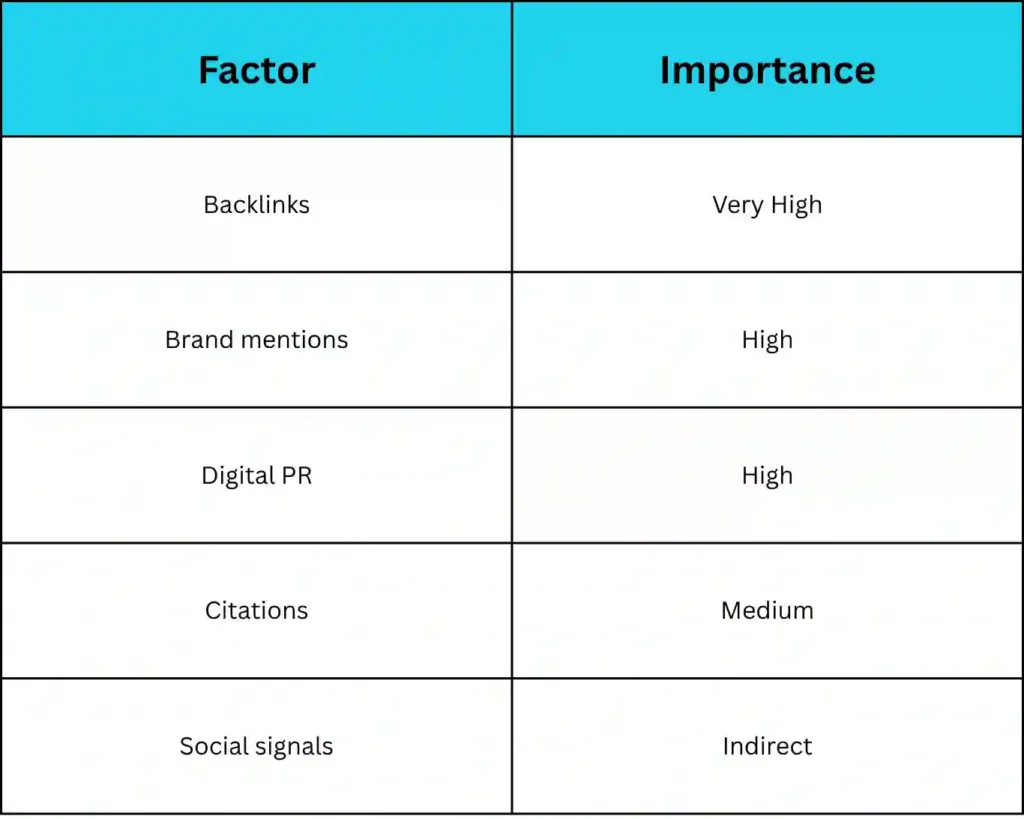
The most important factor remains backlinks.
Backlinks are links from other websites that point to your content.
High-quality backlinks are regarded by search engines as evidence of trust.
High-Quality Backlink Sources
- Industry publications
- News websites
- Universities
- Government resources
- Authoritative blogs
Quantity is never as important as quality.
One strong backlink can outperform hundreds of weak ones.
Off-Page SEO Components
3. Technical SEO
Technical SEO guarantees that search engines can effectively access and comprehend your website.
Without strong technical underpinnings, even great content may suffer.
Key Technical SEO Areas
Website Speed
Fast-loading pages improve user experience and rankings.
Mobile Friendliness
Google primarily uses mobile-first indexing.
Your mobile experience matters significantly.
HTTPS Security
Secure websites build trust and protect users.
Sitemaps in XML
Search engines can find content with the use of sitemaps.
Organized Information
Schema markup helps search engines understand page context.
It can also improve visibility through rich results.
Google Ranking Factors Explained
Hundreds of ranking signals are used by Google.
Although precise algorithms are kept secret, a number of variables constantly affect performance.
Content Quality
- The most important ranking element is still high-quality content.
- Google honors material that:
- demonstrates proficiency
- Solves problems
- Provides unique insights
- Satisfies search intent
Backlink Authority
Strong backlinks continue influencing rankings.
Authority transfer remains fundamental to Google’s system.
User Experience
Factors include:
- Engagement
- Navigation
- Readability
- Mobile usability
Relevance
Content must closely align with search intent.
Freshness
Some topics require frequent updates.
Fresh stuff frequently helps news, technology, finance, and legislation.
Keyword Research: The Foundation of SEO
Inadequate keyword research turns SEO into a guessing game.
Keyword research helps identify:
- Search demand
- User intent
- Competition
- Content opportunities
Types of Keywords
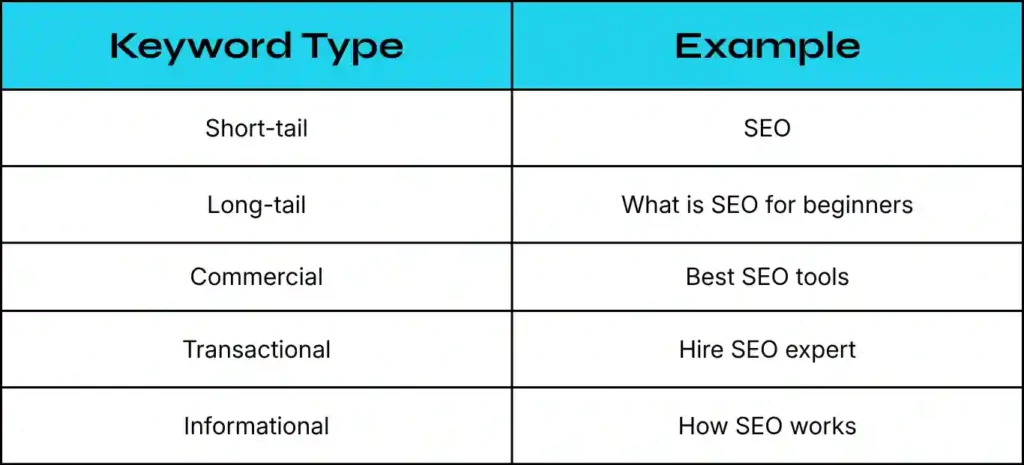
Because they cater to particular user demands, long-tail keywords frequently convert better. .
SEO vs PPC: Which Should You Choose in 2026?
Many companies want to know if they should go with paid advertising or SEO.
The answer depends on goals
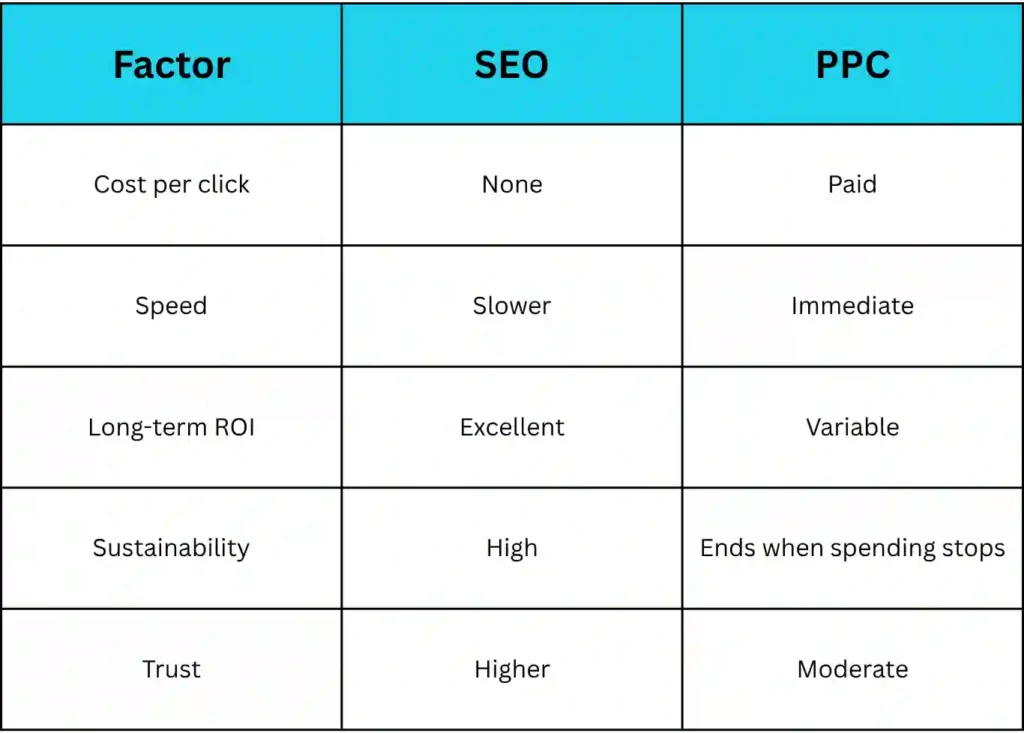
The most effective digital marketing tactics typically incorporate both methods.
Common SEO Mistakes to Avoid
I’ve witnessed persistent SEO errors harm otherwise robust websites over the years.
These include:
- Ignoring search intent
- Publishing thin content
- Keyword stuffing
- Poor internal linking
- Slow website speed
- Weak technical SEO
- Low-quality backlinks
- Duplicate content
E-E-A-T: The Trust Factor Behind Modern SEO
The phrase “E-E-A-T” is likely familiar to anyone who have read Google’s quality guidelines.
It represents:
- Experience
- Expertise
- Authoritativeness
- Trustworthiness
Over the course of my agency work, I have consistently observed that websites that exhibit true competence tend to beat rivals.
According to Google’s Quality Rater Guidelines, evidence that content originates from reliable and experienced sources is what search engines look for
How to Improve E-E-A-T
Show Real Experience
Provide case studies, your own observations, screenshots, and real-world examples.
For instance, describe how a particular optimization strategy improved organic visitors by 60% over a six-month period rather than stating that SEO increases traffic.
Demonstrate Expertise
Provide thorough content that fully addresses inquiries.
Thin articles rarely establish authority.
Build Authority
Authority grows through:
- Backlinks
- Brand mentions
- Industry recognition
- Expert contributions
Increase Trust
Trust signals include:
- HTTPS security
- Clear contact information
- Author biographies
- Privacy policies
- Transparent business details
Local SEO: Winning Customers in Your Area
Businesses can appear in location-based searches with the use of local SEO.
Examples consist of:
SEO company in my area
Miami dentist
Dallas immigration attorney
Since many searches have a local focus, local SEO has become crucial.
Key Local SEO Ranking Factors
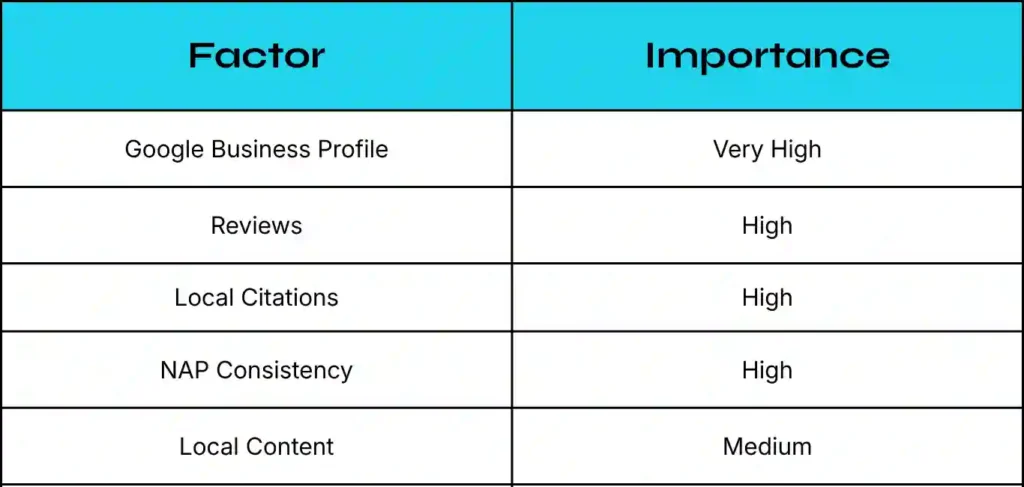
Name, Address, and Phone Number is what NAP stands for.
Local trust signals are strengthened when directories are consistent.
Local SEO Checklist
- Enhance Your Google Business Profile
- Collect authentic reviews
- Build local citations
- Create location pages
- Add local schema markup
- Publish local content
SEO in the Age of AI
Artificial intelligence is one of the most significant changes in search. .
Today, users receive answers from:
- AI Overviews
- ChatGPT
- Gemini
- Claude
- Perplexity
Traditional rankings still matter. However, visibility now extends beyond Google’s blue links.
What Is GEO?
Generative Engine Optimization is referred to as GEO.
Its main goal is to make AI-generated responses more visible.
Your material becomes a source that AI systems cite rather than just appearing on search result pages.
GEO Best Practices
- Publish factual content
- Use clear structure
- Add expert opinions
- Include original research
- Answer questions directly
- Build topical authority
What Is AEO?
AEO means Answer Engine Optimization.
Its main goal is to speed up the extraction of replies by search engines.
AEO-friendly information is frequently used by voice assistants and AI systems.
How to Optimize for AEO
Answer Questions Clearly
Provide concise definitions near the top of pages.
Use FAQ Sections
FAQs help answer specific user queries.
Structure Content Logically
Make use of headings that reflect search queries.
Example:
“What is SEO?””How does SEO operate?”What makes SEO crucial?
This format improves snippet opportunities.
The Relationship Between SEO, GEO, and AEO
Many marketers treat these disciplines separately.
In reality, they overlap significantly.
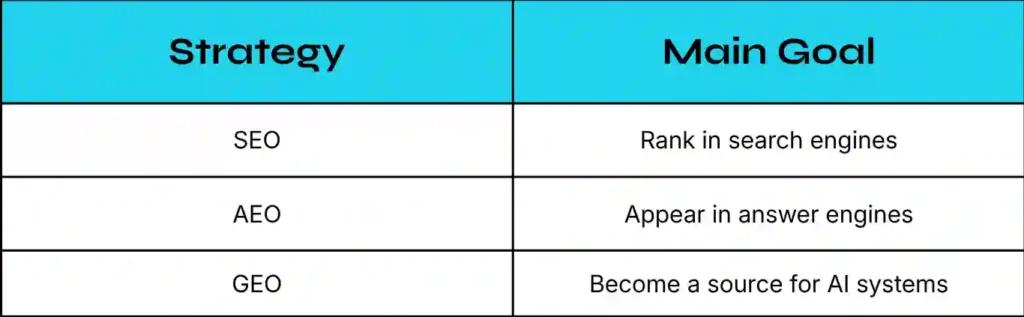
The strongest strategy combines all three.
“I increasingly counsel customers to provide material that is optimized for both AI retrieval algorithms and conventional rankings.
Essential SEO Tools for Beginners and Professionals
Tools simplify optimization and reveal opportunities.
Below are some of the most valuable platforms.
Free SEO Tools
Google Search Console
Provides:
- Indexing information
- Performance data
- Keyword visibility
- Technical issues
Google Analytics
Tracks user behavior and conversions.
Google Trends
Shows search demand over time.
Premium SEO Tools
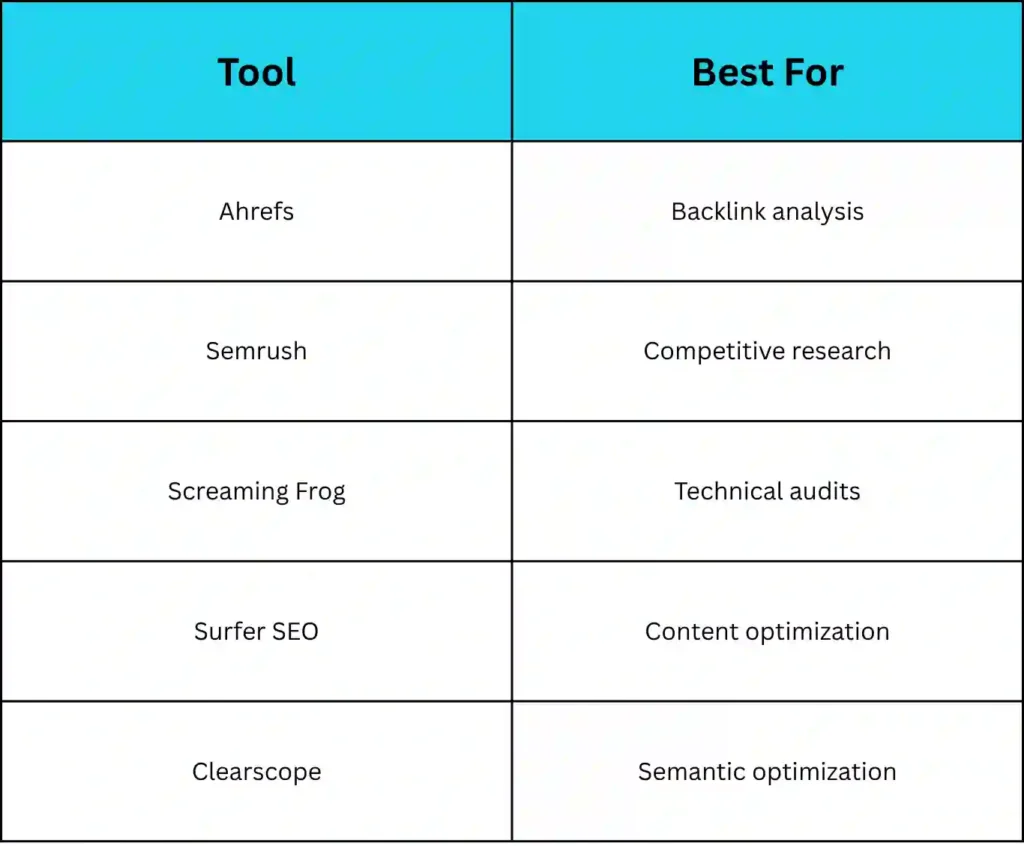
No tool guarantees rankings.
The best results come from combining data with strategy.
How Long Does SEO Take?
Among the most often queries I encounter is:
“How long before SEO works?”
The honest answer depends on competition, authority, resources, and industry.
Typical SEO Timeline
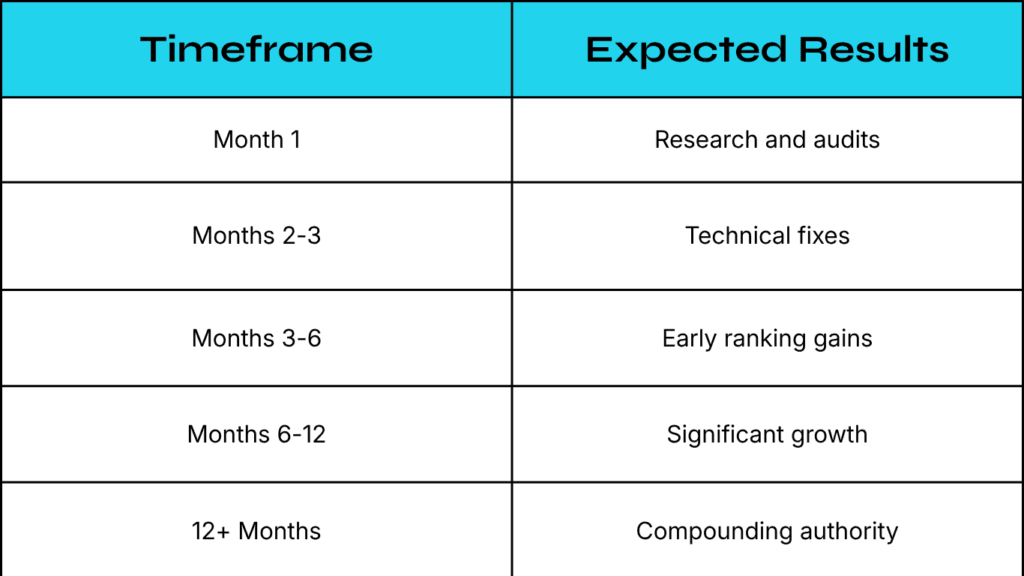
SEO is not a sprint, but a marathon.
Companies that anticipate instant success are frequently let down.
Sustained growth is typically attained by those that maintain consistency.
Advanced SEO Strategies for 2026
The field of SEO is still changing quickly.
Several advanced tactics increasingly influence performance.
Topical Authority
Search engines prefer websites covering entire subject areas.
Instead of publishing isolated articles, create comprehensive topic clusters.
Example:
Main topic:
SEO
Supporting topics:
- On-page SEO
- Technical SEO
- Local SEO
- Link building
- Keyword research
This structure demonstrates expertise.
Entity Optimization
Modern search engines understand entities rather than just keywords.
An entity can be:
- Person
- Brand
- Organization
- Product
- Location
Strengthening entity relationships improves relevance.
Semantic SEO
Semantic SEO focuses on covering concepts rather than repeating keywords.
For example, an article about SEO naturally includes:
- Search engines
- Rankings
- Keywords
- Crawling
- Indexing
- Content
This helps algorithms understand context.
First-Hand Experience Content
Google increasingly values real-world expertise.
Adding personal examples improves credibility.
For example, I used to deal with a law website that was having trouble ranking even though it published material every week.
Within nine months, organic traffic rose by over 140% as a result of reorganizing content around search purpose, enhancing internal links, and creating authority signals.
The content quality improved only slightly.
The strategic framework created the difference.
SEO Checklist for Beginners
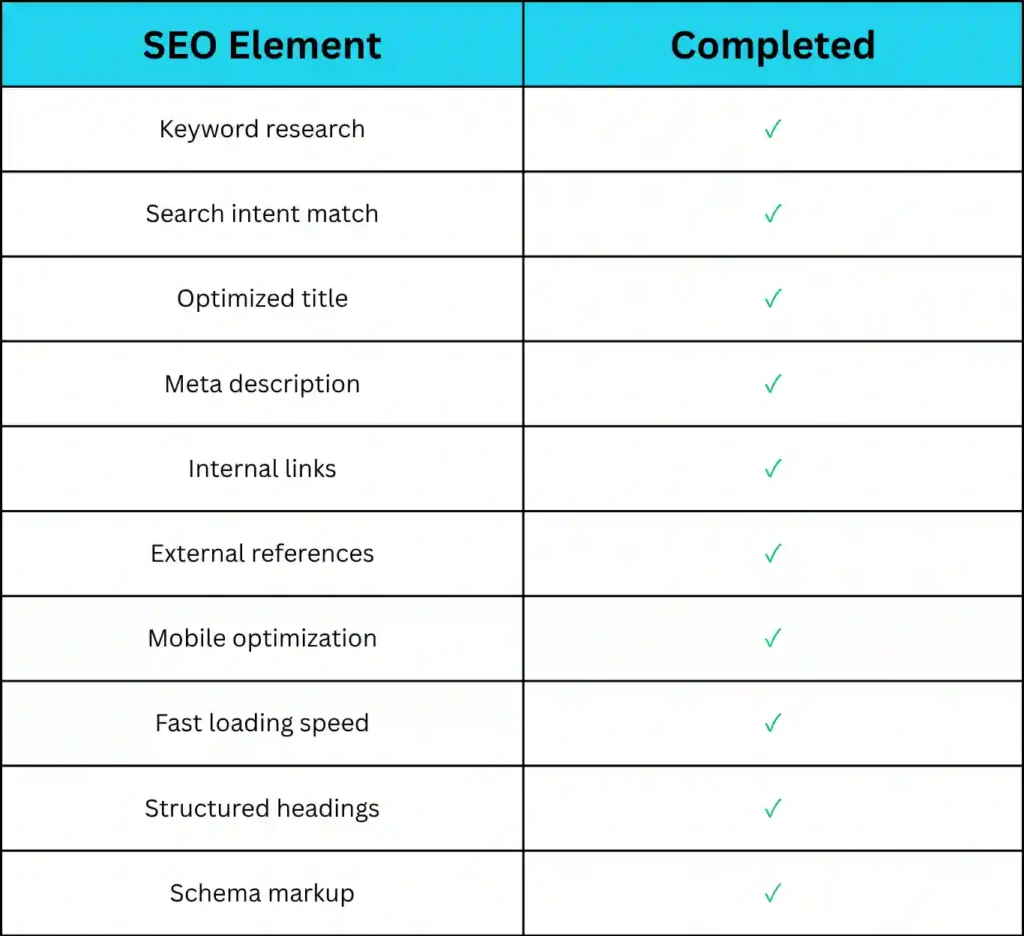
Before publishing any page, review these essentials.
Consistency matters more than perfection.
Future of SEO: What Happens Next?
Search continues changing.
Future optimization tactics will be shaped by a number of trends.
AI Search Expansion
AI-generated answers will continue growing.
Content creators must optimize for citation and retrieval.
User Experience Signals
User satisfaction metrics will likely gain influence.
Multimedia SEO
The significance of podcasts, videos, and visual content will grow.
Entity-Based Search
Algorithms will continue moving beyond keyword matching.
Strong topical authority brands will gain the most.
Frequently Asked Questions About What Is SEO
What is SEO in simple words?
The process of making a website better so search engines can comprehend it, rank it, and show it more prominently in natural search results is known as SEO. Increased traffic, leads, and revenues are frequently the results of improved visibility.
Is SEO free?
Paying for clicks is not necessary for SEO itself. However, investment is frequently required for technical advancements, tools, consultation, and content development. One of the most economical marketing avenues is still organic traffic.
Does SEO still work in 2026?
Yes. SEO remains highly effective. Strong content, authority, technical optimization, and user experience continue to drive exposure across search engines and AI platforms, even though AI has altered search behavior.
What is the difference between SEO and GEO?
Ranking in conventional search results is the main goal of SEO. GEO aims to establish itself as a reliable source that is cited by AI programs like ChatGPT, Gemini, and Perplexity.
Can I learn SEO by myself?
Absolutely. Numerous accomplished experts gained knowledge through trial and error, internet resources, and practical experience. The quickest outcomes come from consistent learning and application.
What is the most important SEO factor?
The cornerstones of effective SEO continue to be high-quality content and alignment with search intent. Technical advancements and backlinks offer little long-term value in the absence of excellent content.
Internal Linking Opportunities
Conclusion: What Is SEO and Why It Matters
So, what is SEO?
SEO is far more than ranking for keywords. It is the strategic process of helping search engines, AI systems, and users discover your content, trust your expertise, and engage with your brand.
The most successful SEO campaigns combine search engine optimization, content quality, technical excellence, authority building, user experience, GEO, and AEO into one cohesive strategy.
In my experience, businesses that invest consistently in SEO gain a significant competitive advantage. They attract qualified visitors, reduce dependence on paid advertising, and build sustainable growth over time.
If you’re serious about growing your online presence, now is the perfect time to develop a comprehensive SEO strategy. Start with strong content, focus on user value, build authority steadily, and optimize for both traditional search engines and emerging AI platforms.
The future belongs to brands that become trusted sources of information. SEO remains one of the most powerful ways to achieve that goal.