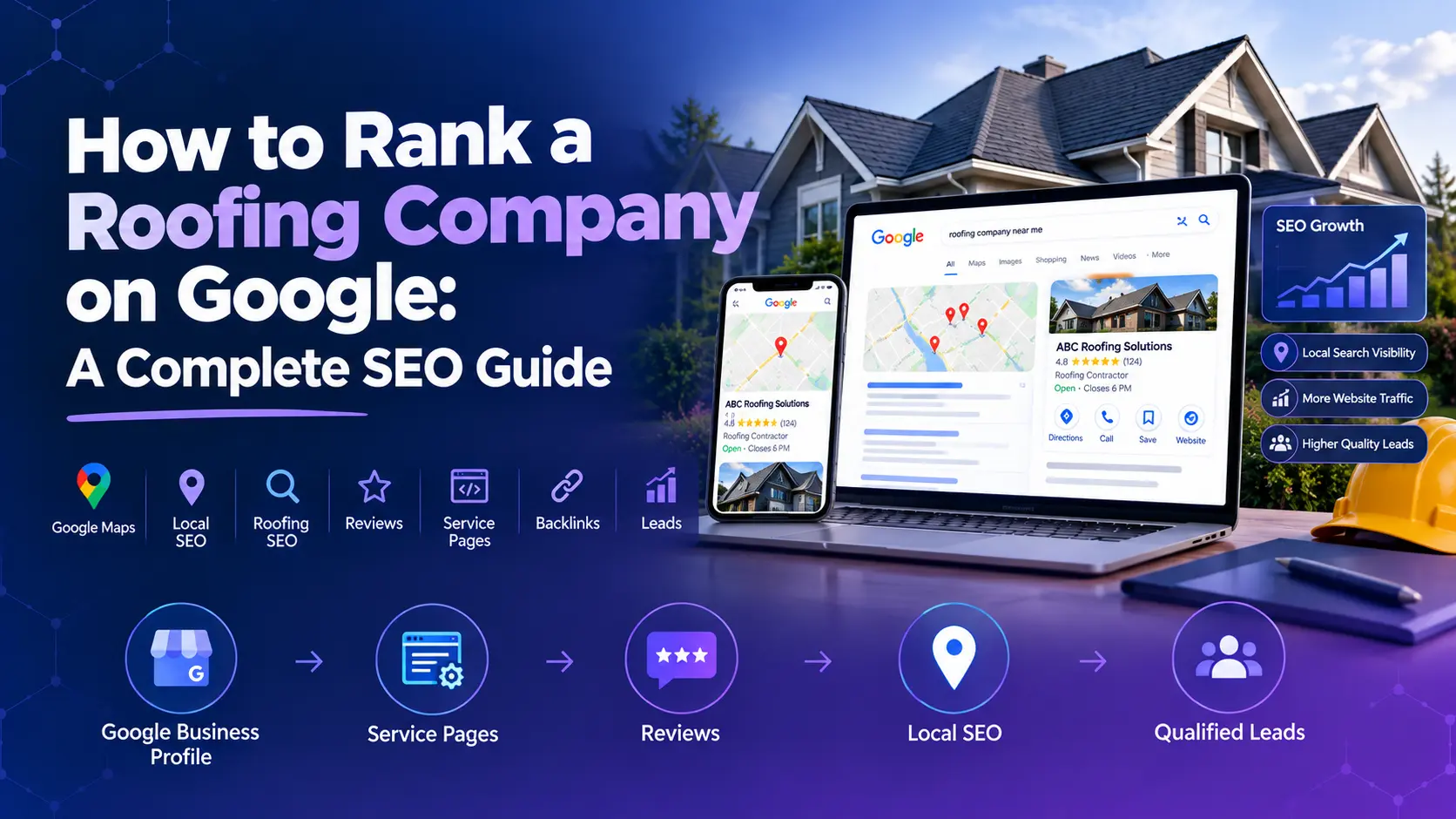
If your roofing company does not appear when local customers search for roof repair, roof replacement, or a roofing contractor, you are probably losing qualified leads to competitors.
The good news is that how to rank a roofing company on Google is not about finding one secret SEO trick. It requires a combination of local search optimization, a strong website, useful content, customer reviews, relevant links, and a properly optimized Google Business Profile.
In my SEO work, I’ve seen roofing companies focus heavily on paid advertising while leaving their organic search presence underdeveloped. Others publish dozens of generic blog posts but have weak service pages or incomplete local signals. Both approaches can limit long-term visibility.
A better strategy connects your website, Google Business Profile, local relevance, content, authority, and conversion system. Google says local search results are primarily influenced by relevance, distance, and prominence. Complete and accurate business profile information can help Google understand which searches your business is relevant to.
So, if you want to understand how to rank a roofing company on Google, you need to optimize for both traditional organic search and local search. This guide explains exactly how to build that strategy.
Table of Contents
- What Does It Take to Rank a Roofing Company on Google?
- Start With Roofing Keyword Research
- Build a Roofing Website That Google Can Understand
- Optimize Your Google Business Profile
- Improve Your Google Maps SEO for Roofers
- Create Location Pages That Actually Help Customers
- Build a Content Strategy Around Roofing Problems
- Earn Quality Roofing Backlinks
- Generate More Google Reviews for Roofers
- Optimize Your On-Page SEO
- Strengthen Technical SEO
- Add Local Business Structured Data
- Build a Strong Internal Linking Structure
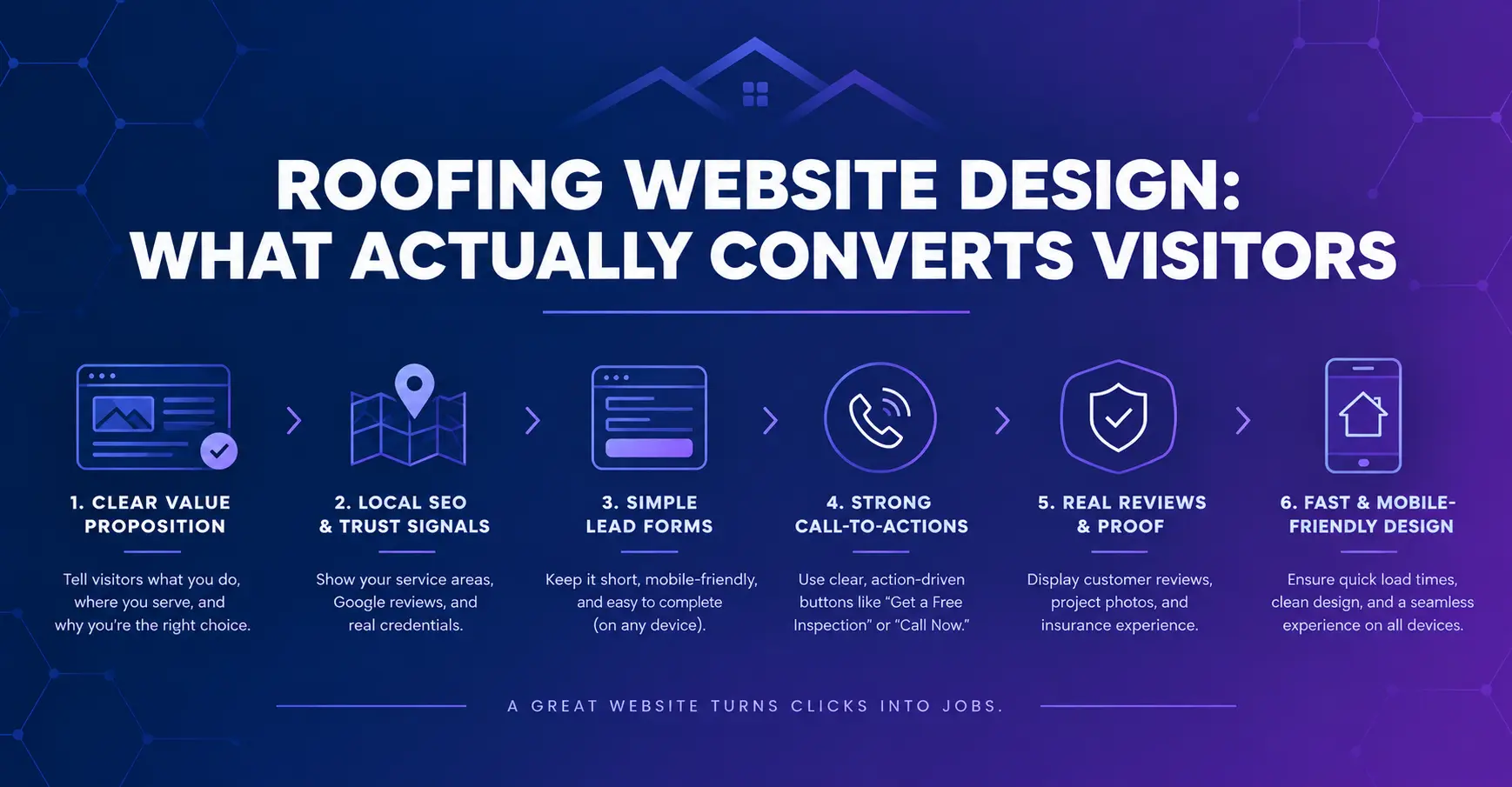
- Optimize for Conversions, Not Just Rankings
- Use First-Hand Experience to Build Trust
- Optimize Roofing Content for AI Overviews and AEO
- Track the Metrics That Actually Matter
- How Long Does Roofing SEO Take?
- Roofing SEO vs. Google Ads
- Common Roofing SEO Mistakes to Avoid
- Roofing SEO Checklist
- Frequently Asked Questions
- Final Thoughts
What Does It Take to Rank a Roofing Company on Google?
Ranking a roofing company involves two closely connected goals. The first is appearing in traditional Google organic results. The second is appearing prominently in local results, including Google Maps and the Local Pack.
A roofing company may rank well organically for a service keyword but still have weak visibility in Maps. Another company may have a strong Google Business Profile but a poorly optimized website. The strongest roofing SEO strategy works on both areas.
| SEO Area | Main Goal | Examples |
|---|---|---|
| Google Business Profile | Improve local visibility | Categories, services, reviews |
| Local SEO | Build geographic relevance. | Location pages, citations |
| On-page SEO | Improve topical relevance. | Service pages, titles, headings |
| Technical SEO | Help with crawling and indexing. | Speed, mobile usability, sitemap |
| Content | Answer customer questions. | Guides, FAQs, roofing advice |
| Link building | Build authority. | Local and industry backlinks |
| Conversion optimization | Turn visitors into leads | Calls, forms, estimates |
| Reputation | Build trust. | Google reviews, testimonials |
The goal isn’t simply to generate website traffic. The goal is to attract people who are actually looking for roofing services in your service area.
1. Start With Roofing Keyword Research
Before changing your website, identify what potential customers actually search for. This is one of the first steps I take when developing SEO for roofing companies because your keyword strategy determines the structure of your website.
A roofing business shouldn’t target only one broad keyword such as “roofing company.” Customers use different searches depending on their problem, location, urgency, and buying stage.
Build a Roofing Keyword Map
Your keyword research should include several groups.
Core service keywords:
- roofing company
- roofing contractor
- roof repair
- roof replacement
- roofing installation
- residential roofing
- commercial roofing
- emergency roof repair
- roof inspection
Local keywords:
- roofing company in [city]
- roofing contractor in [city]
- roof repair [city]
- roof replacement [city]
- roofer near me
- roofing contractor near me
Problem-based keywords:
- leaking roof repair
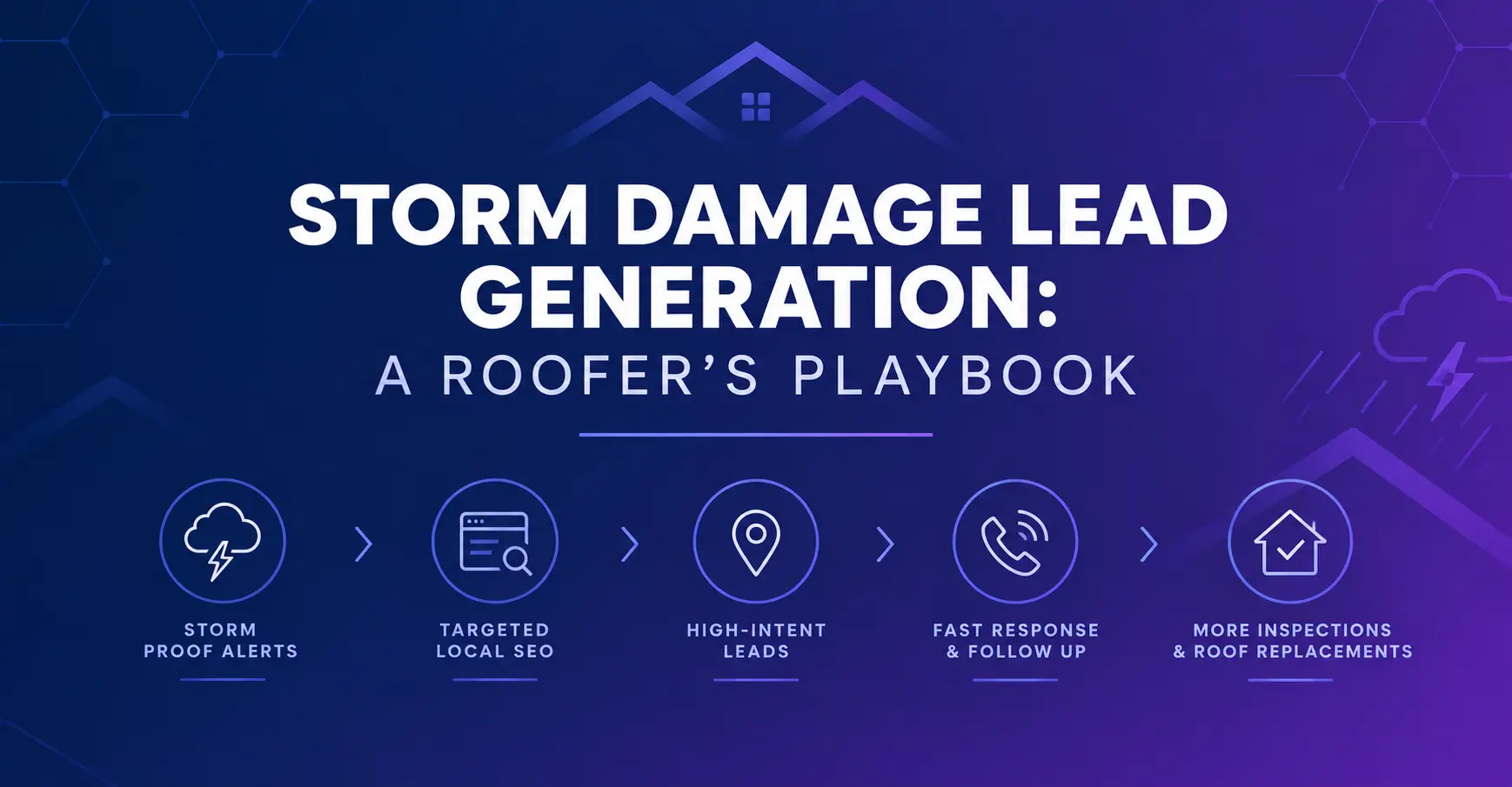
- storm damage roof repair
- damaged shingles
- roof leak emergency
- water damage roof.
- missing shingles
- roof inspection after storm
Commercial investigation keywords:
- best roofing contractor
- roofing company reviews
- roofing replacement cost
- roof repair cost
- roofing estimate
- roofing contractor quotes
These keywords represent different search intents. Someone searching “what causes roof leaks” may still be researching. Someone searching “emergency roof repair near me” is much closer to becoming a customer.
Match Keywords to the Right Pages
Don’t force every keyword onto your homepage. Instead, create a logical keyword-to-page structure.
| Search Intent | Keyword Example | Recommended Page |
|---|---|---|
| Broad | roofing company | Homepage |
| Service | roof replacement | Roof Replacement page |
| Service | roof repair | Roof Repair page |
| Local | roofing contractor Dallas | Dallas location page |
| Problem | leaking roof | Roof Leak Repair page |
| Commercial | roof replacement cost | Cost guide |
| Informational | How often replace roof? | Blog/guide |
This approach prevents keyword cannibalization and gives Google clearer signals about what each page is about.
2. Build a Roofing Website That Google Can Understand
Your website is the foundation of your roofing website SEO strategy. A visually attractive website isn’t enough.
Google needs to understand what you do, where you operate, which services you provide, and which pages answer specific customer searches. Your main navigation should make important services easy to discover.
For example:
Home → Services → Roof Repair → Emergency Roof Repair
Home → Services → Roof Replacement → Residential Roof Replacement
Home → Service Areas → Dallas → Roofing Contractor in Dallas
This creates a logical hierarchy for both visitors and search engines.
Create Dedicated Roofing Service Pages
One of the most common problems I see is a roofing website trying to rank every service through one generic homepage. Instead, create dedicated roofing service pages.
Examples include:
- Roof Repair
- Roof Replacement
- Residential Roofing
- Commercial Roofing
- Emergency Roof Repair
- Storm Damage Roofing
- Roof Inspection
- Shingle Roofing
- Metal Roofing
- Flat Roof Repair
Each page should explain:
- What the service involves
- Common customer problems
- Your process
- Materials or methods used
- Service area
- Why customers choose the company
- Relevant FAQs
- How to request an estimate
Avoid creating nearly identical pages simply by changing the city name. That creates thin, repetitive content instead of useful local resources.
3. Optimize Your Google Business Profile
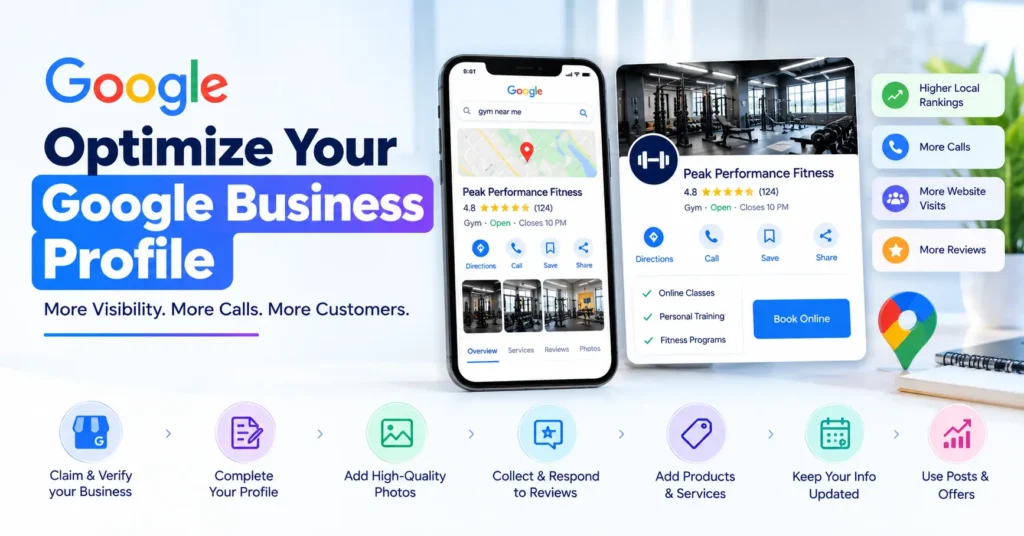
If you’re serious about how to rank a roofing company on Google, your Google Business Profile deserves significant attention.
Google states that complete and accurate business profile information can improve the chances of appearing for relevant local searches.
Optimize the Profile Completely
Make sure your profile includes accurate
- Business name
- Primary category
- Secondary categories where appropriate
- Phone number
- Website
- Business hours
- Service areas
- Services
- Photos
- Business description
Your primary category should accurately represent the actual business. Don’t choose a category simply because you believe it has higher search volume.
Add Your Roofing Services
Use the services section to clearly communicate what the company actually provides. Depending on the business, this may include
- Roof repair
- Roof replacement
- Roof inspection
- Storm damage repair
- Commercial roofing
- Residential roofing
- Emergency roofing
Keep the information accurate and consistent with the actual services offered.
Add Real Project Photos
Roofing is highly visual. Use original photos from actual projects whenever possible.
Useful images include
- Before-and-after roof repairs
- Completed roof replacements
- Shingle installation
- Roofing crews at work
- Storm damage inspections
- Commercial roofing projects
- Close-ups of completed work
Real project photography can also support conversion because potential customers can see evidence of your experience.
4. Improve Your Google Maps SEO for Roofers
Google Maps SEO for roofers is closely connected to local search optimization. However, there is an important limitation many businesses overlook. You cannot simply add more keywords and force your company to appear at the top of Maps.
Google specifically states that there is no way to request or pay for a better local ranking. Local results primarily consider relevance, distance, and prominence. That means your strategy should focus on building genuine local relevance and prominence.
Strengthen Local Relevance
Make it obvious:
- What roofing services you provide
- Where you operate
- Which customers you serve
- What type of roofing do you specialize in?
Your website should reinforce the same information. For example, if you serve several cities, create genuinely useful location pages explaining the services available in each area. Don’t create 50 pages that contain the same paragraph with different city names.
Understand the Distance Factor
Distance matters in local search. A roofing company cannot necessarily rank equally well across an entire metropolitan area simply because it has optimized its website.
Google uses the searcher’s location and other location signals when determining local results. This is why local SEO expectations should be realistic.
5. Create Location Pages That Actually Help Customers
Location pages can be powerful for local SEO for roofing companies, but only when they provide genuine value. A strong city page could include:
Roofing Services Available in the Area
Explain which roofing services customers can request.
Local Roofing Problems
Discuss issues relevant to the area’s climate, housing stock, or common roofing materials when you have legitimate expertise or evidence.
Service Process
Explain how inspections, estimates, repairs, or replacements work.
Local Project Examples
Show actual projects completed in that area if available.
Frequently Asked Questions
Answer questions customers in that market commonly ask. The objective is to create a useful local resource rather than a doorway page designed only to capture rankings.
6. Build a Content Strategy Around Roofing Problems
Blog content should support your commercial pages. Don’t publish articles simply because a keyword has search volume. Instead, answer questions that potential customers ask before hiring a roofer.
Examples include:
- How often should a roof be replaced?
- How much does roof replacement cost?
- How do I know if my roof needs repair?
- What causes roof leaks?
- Should I repair or replace my roof?
- How long does a roof replacement take?
- What should I do after storm damage?
- How long do asphalt shingles last?
- Does homeowners insurance cover roof damage?
These topics can attract customers earlier in the buying journey.
Use Content to Support Service Pages
Suppose your primary service page targets “roof replacement.” You could create supporting content such as
- Roof Replacement Cost Guide
- Signs You Need a New Roof
- Roof Repair vs. Replacement
- How Long Does Roof Replacement Take?
- Best Roofing Materials for Homes
- How to Prepare for Roof Replacement
Then internally link these articles to your roof replacement service page. This creates a topical relationship between informational and commercial content.
7. Earn Quality Roofing Backlinks
Roofing backlinks can help build authority, but quality matters more than collecting hundreds of random links. Google’s spam policies prohibit manipulative practices designed to influence rankings, including certain forms of link abuse.
For a roofing company, look for legitimate opportunities such as
- Local business organizations
- Community organizations
- Industry associations
- Local news publications
- Home improvement publications
- Construction directories
- Supplier relationships
- Sponsorships
- Local events
- Relevant partnerships
For example, if a roofing company sponsors a legitimate local community event, that organization may naturally mention the company online.
The important distinction is relevance and authenticity. Don’t buy large packages of low-quality backlinks simply because someone promises fast rankings.
8. Generate More Google Reviews for Roofers
Reviews influence customer trust and can contribute to local prominence. Google states that review count and positive ratings can contribute to local ranking, alongside other prominence signals.
But reviews shouldn’t be treated only as an SEO tactic. They are also a conversion asset. When someone sees 4.8 stars from hundreds of customers. They may feel more comfortable requesting an estimate.
Create a Review Process
After completing a roofing project:
- Confirm the project is completed.
- Make sure the customer is satisfied.
- Send a simple review request.
- Provide the legitimate Google review link.
- Thank the customer for their feedback.
- Respond professionally to reviews.
Never manufacture reviews. Never create fake customer accounts. Never offer undisclosed incentives for positive reviews. Google’s structured-data guidance also places restrictions on incentivized reviews and self-controlled review markup.
9. Optimize Your On-Page SEO
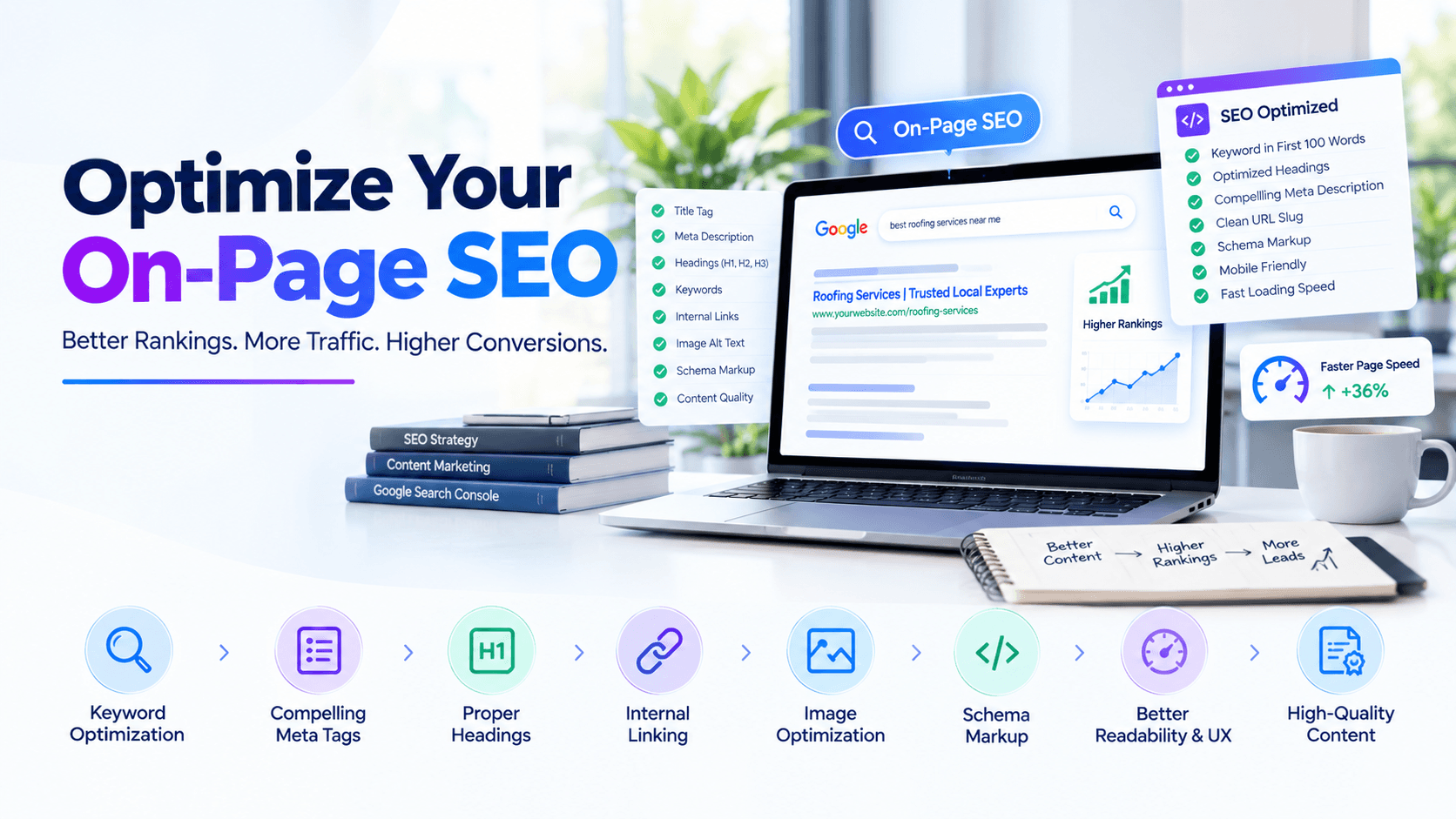
Every important page should have a clear topic.
For example:
Title: Roof Repair in Dallas | Emergency Roofing Services
H1: Roof Repair in Dallas
Then use supporting headings such as
Common Roof Problems We Repair
Our Roof Repair Process
When You Need Emergency Roof Repair
Roof Repair FAQs
Use the primary keyword naturally. Don’t repeat the same phrase in every sentence. Search engines can understand related concepts such as roof leaks, shingles, inspections, replacement, contractors, storm damage, and roofing materials.
That means you can build topical relevance without keyword stuffing.
Optimize Your Images
Roofing websites often contain many project photographs.
Optimize them by using
- Descriptive filenames
- Relevant alt text
- Compressed image files
- Appropriate dimensions
- Modern image formats where practical
Instead of:
IMG_4829.jpg
Use something descriptive such as
roof-replacement-dallas.jpg
For alt text, describe the image accurately.
For example:
Roof replacement completed on a residential home in Dallas
Don’t stuff keywords into alt text when the image doesn’t support them.
10. Strengthen Technical SEO
Even excellent content can struggle if Google has difficulty crawling or indexing your website. Your technical SEO checklist should include
- HTTPS
- Mobile-friendly pages
- Crawlable navigation
- XML sitemap
- Proper canonical URLs
- Indexable service pages
- Correct redirects
- Clean URL structure
- Fast-loading pages
- No accidental noindex tags
- No major broken links
Google recommends using tools such as Search Console to monitor search performance and indexing.
Check Google Search Console.
Search Console can help you identify:
- Search queries
- Impressions
- Clicks
- Average position
- Indexing problems
- Page performance
- Search visibility changes
Don’t wait until traffic disappears to start checking Search Console. Use it continuously.
11. Add Local Business Structured Data
Structured data helps Google understand information about your website. Google’s documentation supports LocalBusiness structured data and recommends providing relevant business information such as the business name and address, with additional properties available depending on the business.
For a roofing company, structured data may help communicate information such as
- Business name
- Address
- Phone number
- Opening hours
- Geographic information
- Website
- Relevant business details
However, schema is not a magic ranking button. Adding markup does not guarantee that Google will display a rich result. Google recommends validating structured data and ensuring that it follows its guidelines.
12. Build a Strong Internal Linking Structure
Internal links are often overlooked by roofing companies. Imagine your website contains
Roof Replacement
Roof Repair
Storm Damage Roofing
Roof Inspection
Roof Replacement Cost Guide
Instead of keeping these pages isolated, connect them logically. For example, a blog about roof replacement costs could link to your roof replacement service page. A storm damage article could link to your emergency roof repair page.
A roof inspection page could link to your roof replacement guide. This helps visitors navigate your website and helps search engines discover relationships between your pages.
Example Internal Linking Structure
Homepage
│
├── Roof Repair
│   ├── Emergency Roof Repair
│   └── Roof Leak Repair Guide
│
├── Roof Replacement
│   ├── Roof Replacement Cost
│   └── Signs You Need a New Roof
│
├── Storm Damage Roofing
│   └── What to Do After a Storm
│
└── Service Areas
    ├── Roofing in Dallas
    ├── Roofing in Plano
    └── Roofing in Fort Worth
This creates a stronger topical architecture.
13. Optimize for Conversions, Not Just Rankings
Getting to page one is not the final objective. You need to turn search visibility into roofing leads. A visitor should immediately understand
- What you do
- Where you work
- Why they should trust you
- What they should do next
Your service pages should have clear calls to action.
Examples:
Request a Free Roofing Estimate
Schedule a Roof Inspection
Call for Emergency Roof Repair
Get Your Roof Replacement Quote
Don’t hide your phone number at the bottom of the page. For mobile visitors, make contacting the company easy.
A Simple Roofing Conversion Path
Google Search
      ↓
Service or Location Page
      ↓
Trust Signals
      ↓
Project Photos / Reviews
      ↓
Clear CTA
      ↓
Call or Form
      ↓
Qualified Roofing Lead
This is where SEO and marketing work together.
14. Use First-Hand Experience to Build Trust
Generic roofing content is everywhere. One way to make your website more useful is to include real experience. For example, instead of writing
Roof inspections are important.
Explain what your team actually looks for during an inspection. You might discuss:
- Damaged shingles
- Flashing problems
- Ventilation issues
- Granule loss
- Water intrusion
- Sagging areas
- Gutter-related problems
If appropriate, include original project photographs and explain what was discovered. This gives readers information they cannot get from a generic AI-generated article.
It also supports the broader principle of creating useful, original content rather than content designed solely to manipulate rankings.
Google’s current guidance for generative AI search emphasizes unique, useful content and says SEO fundamentals continue to matter for Google’s generative search experiences.
15. Optimize Roofing Content for AI Overviews and AEO
Search is changing customers may now see AI-generated answers alongside traditional search results. That does not mean you need a completely separate “AI SEO” strategy.
Google’s current documentation says its generative AI search experiences are built on its existing Search systems and that established SEO best practices remain relevant. For roofing content, make answers easy to understand. Start important sections with direct answers.
For example:
How Do I Know If My Roof Needs Replacement?
A roof may need replacement when it has extensive damage, repeated leaks, widespread shingle deterioration, or has reached the expected service life of its materials. A professional inspection can help determine whether repair or replacement is appropriate. Then expand with supporting details.
This structure works well for
- Featured snippets
- Voice search
- AI-generated summaries
- FAQ-style queries
- Traditional organic results
Use Question-Based Headings
Examples include:
- How much does roof replacement cost?
- How long does a roof replacement take?
- Should I repair or replace my roof?
- How do I find a roofing contractor?
- Does insurance cover storm damage?
Give the direct answer first. Then provide the evidence and explanation.
16. Track the Metrics That Actually Matter
Rankings alone don’t tell you whether your SEO strategy is producing business results. For roofing lead generation, track both SEO and revenue metrics.
| Metric | What It Tells You |
|---|---|
| Organic clicks | Traffic from Google |
| Organic impressions | Search visibility |
| Average position | Ranking performance |
| CTR | How often users click |
| Phone calls | Direct lead generation |
| Form submissions | Conversion activity |
| Qualified leads | Lead quality |
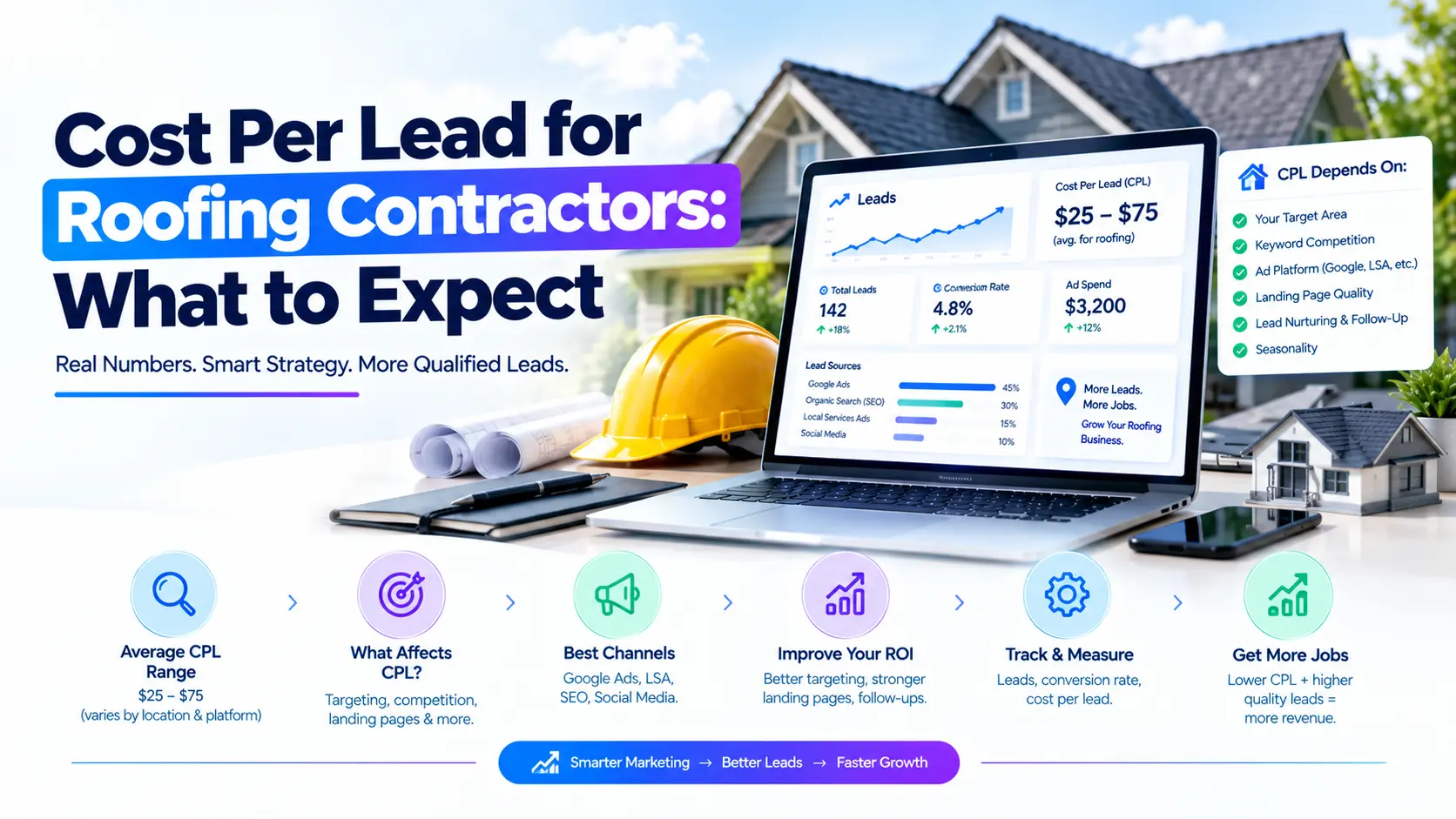
| Cost per lead | Acquisition efficiency |
| Conversion rate | Website effectiveness |
| Revenue from organic | Business impact |
A keyword moving from position 40 to position 15 is useful progress. But if it generates no qualified customers, it may not be commercially important. That’s why I recommend connecting Search Console and analytics data with actual lead tracking whenever possible.
17. How Long Does Roofing SEO Take?
There is no universal timeline for SEO. A new roofing website with little authority may need considerably more time than an established company with a strong website, reviews, links, and local presence.
Your timeline can be affected by:
- Website age
- Existing authority
- Competition
- Location
- Service area
- Current rankings
- Content quality
- Technical problems
- Backlink profile
- Google Business Profile strength
- Review profile
Instead of promising a fixed ranking date, measure progress through stages.
Early Stage
Fix technical issues and optimize foundational pages.
Growth Stage
Build content, local relevance, reviews, and authority.
Expansion Stage
Target additional services, locations, and commercial-intent searches.
Compounding Stage
Strengthen existing rankings and continue earning authority. SEO is usually more effective as a continuous acquisition channel than as a one-time website project.
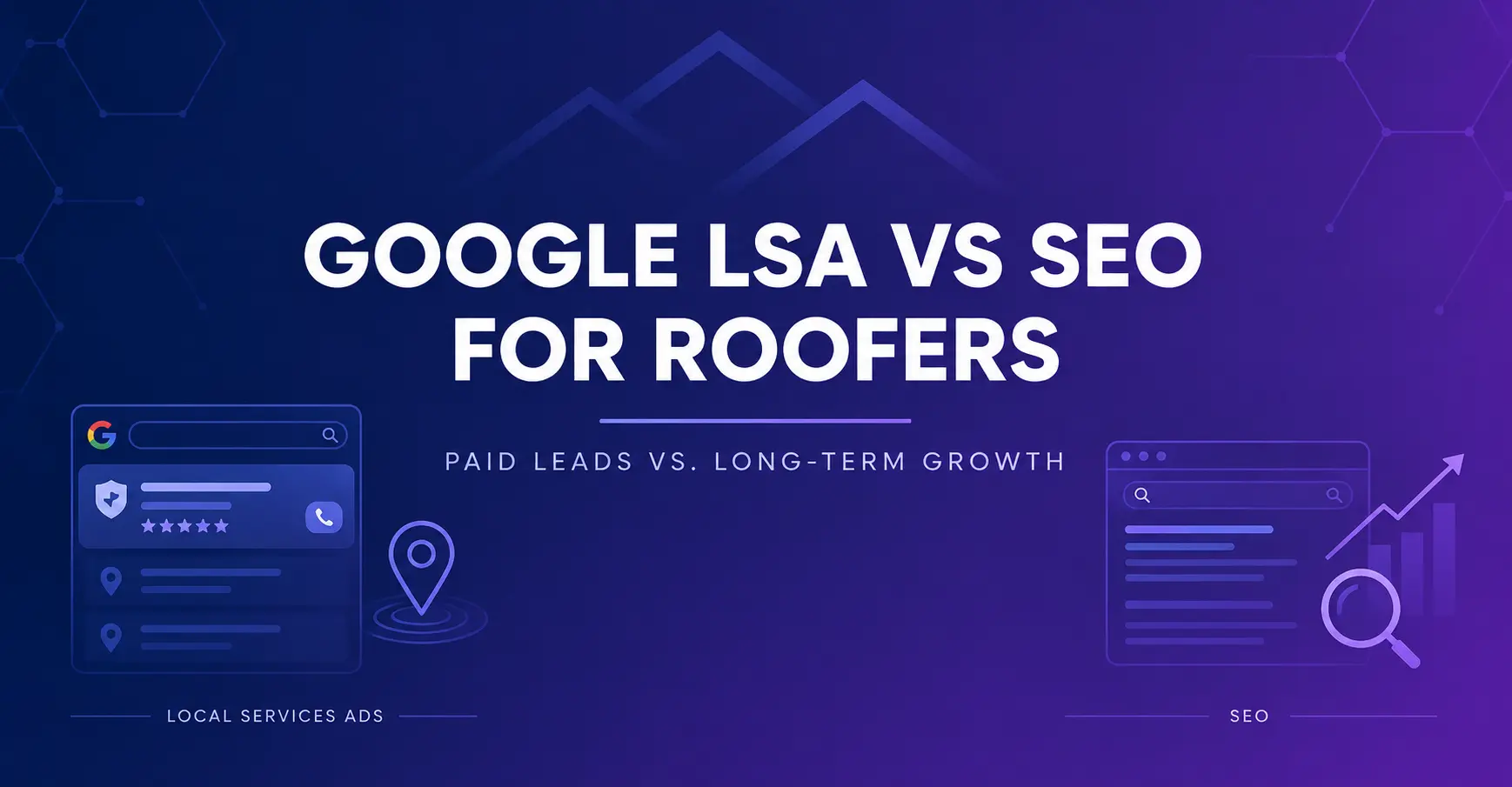
18. Roofing SEO vs. Google Ads
Many roofing companies ask whether they should invest in SEO or Google Ads. These channels work differently.
| SEO | Google Ads |
|---|---|
| Builds organic visibility | Provides paid visibility |
| Can compound over time | Stops when spending stops |
| Requires ongoing optimization | Requires ongoing ad management |
| Strong for informational searches | Strong for immediate commercial intent |
| Can support local visibility | Can capture targeted searches |
| Requires patience | Can generate traffic quickly |
This isn’t necessarily an either/or decision. A roofing company may use paid search while building its organic presence. For example, Google Ads can target immediate high-intent searches, while SEO roofing builds long-term visibility for service, local, and informational searches. The right mix depends on budget, competition, business goals, and existing organic performance.
19. Common Roofing SEO Mistakes to Avoid
Keyword Stuffing
Repeating “roofing company” unnaturally does not create a better experience. Write for customers first.
Duplicate Location Pages
Changing only the city name across dozens of pages creates little additional value. Create genuinely useful local content.
Buying Cheap Backlinks
Large quantities of irrelevant links can create risk instead of authority. Focus on relevant, legitimate mentions.
Ignoring Reviews
A strong website cannot completely compensate for a weak reputation. Make customer experience and legitimate review generation part of your marketing process.
Using Only the Homepage
Your homepage should not have to rank for every roofing service. Create dedicated pages for important services.
Publishing AI Content Without Expertise
AI can help with research, outlining, and drafting. But generic content without original experience can struggle to differentiate your business. Add real project examples, expert explanations, photographs, data, and useful observations.
Ignoring Conversion Optimization
Traffic without calls, forms, or qualified inquiries isn’t the business outcome you want. Every important page should make the next step obvious.
Roofing SEO Checklist
Use this checklist when auditing a roofing company’s Google visibility.
Google Business Profile
- Profile claimed and verified
- Correct business information
- Accurate primary category
- Relevant services added
- Service areas accurately represented
- High-quality project photos
- Reviews actively managed
- Customer reviews answered professionally
Website
- HTTPS enabled
- Mobile-friendly
- Fast-loading pages
- Clear navigation
- Dedicated service pages
- Location pages where justified
- Strong title tags
- Descriptive meta descriptions
- Optimized headings
- Descriptive image alt text
- Internal links
- XML sitemap
- Search Console configured
Content
- Roofing keyword research completed
- Service intent covered
- Local intent covered
- Informational questions answered
- Original expertise included
- Project examples included
- FAQs included
- Content regularly reviewed and improved
Authority
- Relevant local citations
- Industry relationships
- Local backlinks
- Community mentions
- Legitimate business directories
- Strong online reputation
Lead Generation
- Phone number easy to find
- Click-to-call on mobile
- Clear estimate CTA
- Contact forms work
- Leads are tracked
- Qualified leads are measured
- Organic conversions are attributed
Frequently Asked Questions
How do I rank a roofing company on Google?
To rank a roofing company on Google, optimize its Google Business Profile, build useful service and location pages, target relevant roofing keywords, earn legitimate backlinks and reviews, improve technical SEO, and create helpful content. Local rankings also depend on relevance, distance, and prominence.
How long does it take for a roofing company to rank on Google?
There is no guaranteed timeline. Results depend on competition, location, website authority, technical health, content quality, links, reviews, and the company’s existing visibility. Established businesses with strong foundations may progress differently from new websites entering competitive local markets.
Does Google Business Profile help roofing companies rank?
Yes, a complete and accurate Google Business Profile can help Google understand a business and its relevance to local searches. Google says local results are primarily based on relevance, distance, and prominence. However, completing a profile does not guarantee a particular ranking.
How important are Google reviews for roofers?
Google reviews are important for both reputation and local visibility. Google identifies review count and positive ratings as factors that can contribute to local prominence. Reviews also give potential customers evidence about other people’s experiences with the roofing company.
Should a roofing company create city pages?
A roofing company can create location pages when it genuinely serves those locations and can provide useful local information. Each page should offer unique value rather than simply replacing one city name with another. Thin duplicate location pages are unlikely to provide meaningful value to users.
What keywords should a roofing company target?
A roofing company should target service, local, problem-based, and commercial keywords. Examples include roof repair, roof replacement, roofing contractor in [city], emergency roof repair, storm damage roofing, and roofing estimate. Keyword targeting should reflect actual services and customer search intent.
Is SEO better than Google Ads for a roofing company?
SEO and Google Ads serve different purposes. SEO can build organic visibility over time, while Google Ads provides paid placement for targeted searches. A roofing company can use both depending on its budget, competition, lead goals, and current organic visibility.
How can roofers get more leads from Google?
Roofers can increase Google leads by improving local visibility, optimizing service pages, targeting high-intent searches, building trust through legitimate reviews, improving calls to action, and tracking calls and forms. Ranking alone is not enough; the website must make it easy for visitors to request an estimate.
Does blogging help roofing SEO?
Blogging can support roofing SEO when articles answer relevant customer questions and connect naturally to commercial service pages. Topics such as roof replacement costs, storm damage, roof leaks, and repair-versus-replacement decisions can help a company address informational and commercial search intent.
What is local SEO for roofing companies?
Local SEO for roofing companies is the process of improving visibility for searches connected to a specific geographic area. It includes Google Business Profile optimization, local website content, relevant citations, reviews, location pages, local links, and consistent business information.
Can a roofing company rank without backlinks?
A company can rank for some searches without a large backlink profile, particularly where competition is limited. However, links can contribute to authority and prominence. The right strategy is to earn relevant, legitimate mentions rather than pursuing large quantities of low-quality backlinks.
What is the difference between roofing SEO and local SEO?
Roofing SEO covers the broader optimization of a roofing company’s website and search presence. Local SEO focuses specifically on visibility in geographically relevant searches, including Google Maps and local results. Most roofing companies need both because customers search for roofing services locally.
How can I improve my roofing company’s Google Maps ranking?
Start by maintaining an accurate and complete Google Business Profile, selecting appropriate business information and services, building legitimate reviews, strengthening local relevance, and improving the associated website. Google says local rankings primarily consider relevance, distance, and prominence.
Final Thoughts: How to Rank a Roofing Company on Google
Learning how to rank a roofing company on Google is really about building a stronger search presence from every angle. Start with roofing keyword research. Build useful roofing service pages. Optimize your Google Business Profile for roofers. Strengthen your Google Maps SEO for roofers. Create useful local and informational content. Earn legitimate roofing backlinks.
Build a consistent process for collecting Google reviews for roofers. Then connect everything to a website designed to generate roofing leads. The biggest mistake is treating SEO as a collection of isolated tactics. A roofing company doesn’t rank because it added keywords to a page.
It earns visibility by becoming a clearer, more relevant, trustworthy, and authoritative result for the searches its customers actually make.
Google’s current guidance also makes this increasingly important for AI-driven search experiences. Google says established SEO fundamentals continue to apply to its generative search features, while useful and original content remains important.
So if you’re investing in SEO for roofing companies, don’t chase shortcuts. Build the website, local presence, reputation, content, authority, and conversion system together. That is the foundation for sustainable Google rankings for roofing companies and a stronger pipeline of local roofing leads.
About the Author
Jawaria is an SEO and digital marketing professional focused on helping small and mid-sized businesses improve organic visibility, lead generation, website performance, and digital growth. Through HQ Growth Lab, she focuses on practical SEO, web development, AI automation, and digital marketing strategies designed to help businesses build, rank, and scale.