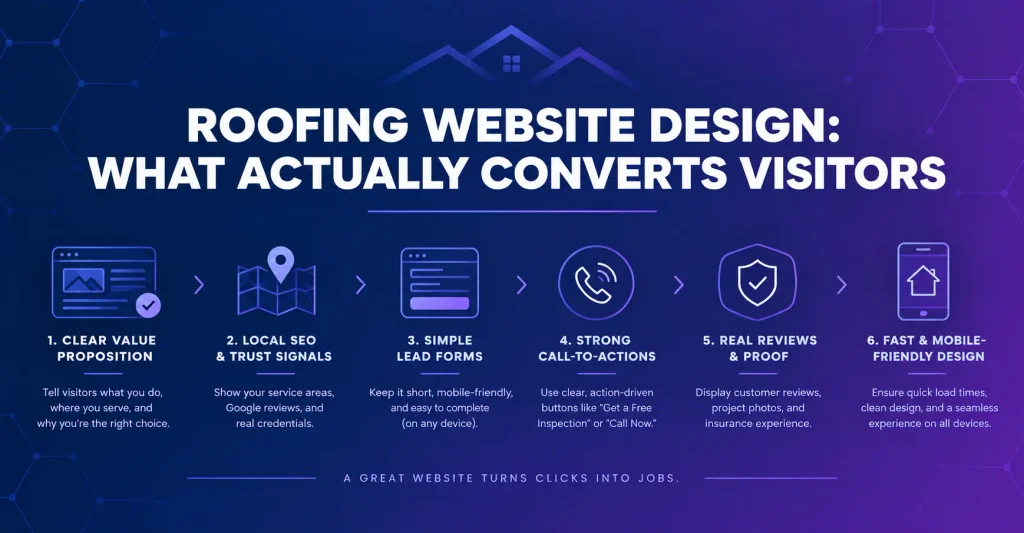
A roofing website should do more than look professional. It should help homeowners understand your services, trust your company, and contact you without confusion. That is where effective roofing website design makes a measurable difference.
In my experience, many roofing companies lose potential customers because their websites focus too much on appearance and not enough on conversion. A beautiful homepage will not generate leads if visitors cannot find your services, trust your business, or request an estimate quickly.
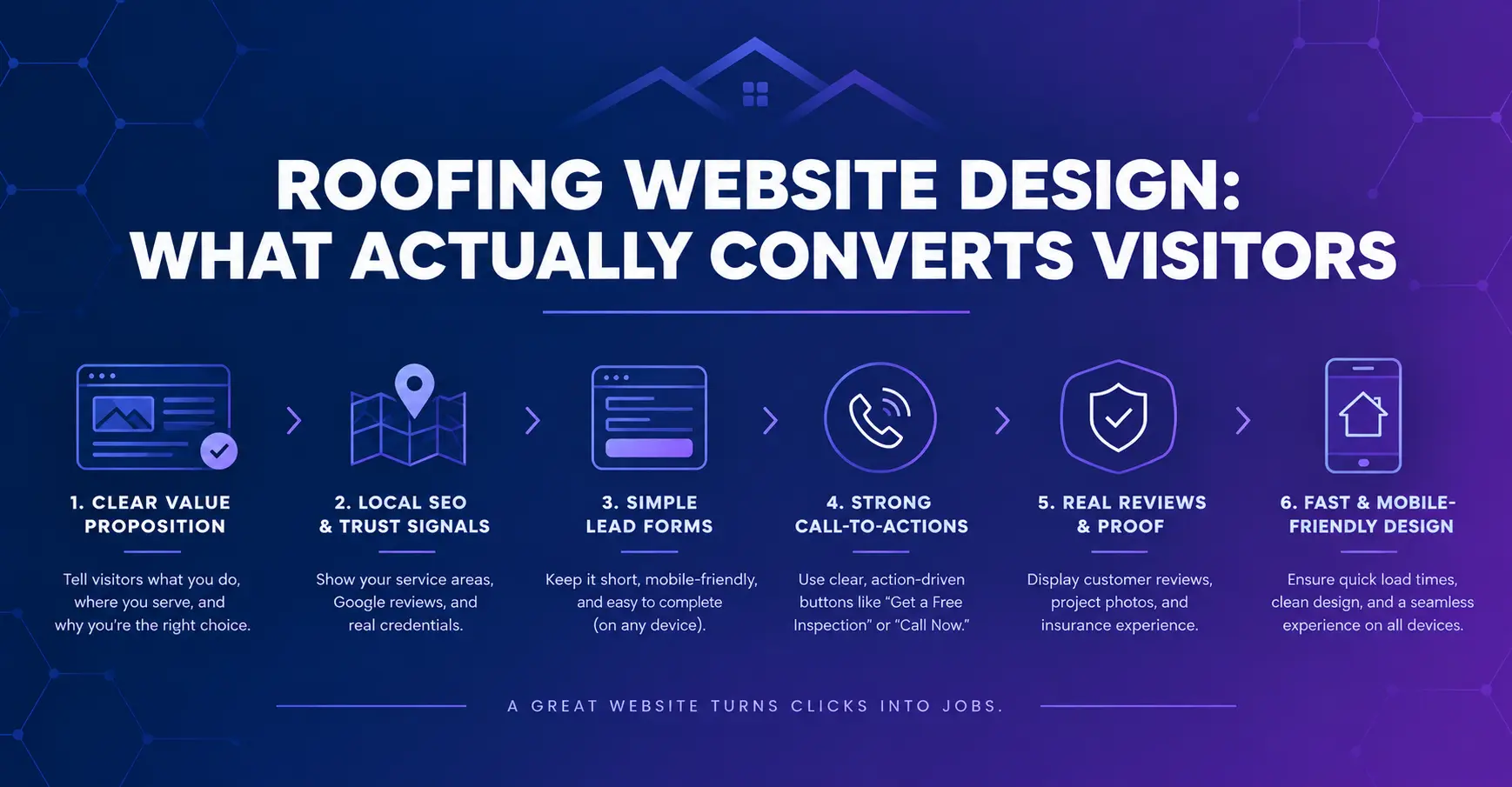
Effective roofing website design combines clear messaging, strong calls to action, mobile usability, local SEO, trust signals, fast performance, and simple navigation. When these elements work together, your website becomes a lead-generation asset instead of just an online brochure.
What Is Roofing Website Design?
Roofing website design is the process of creating and structuring a roofing company’s website around the needs of its customers and business goals.
It includes the website’s layout, navigation, service pages, images, content, calls to action, forms, mobile experience, speed, trust signals, and conversion paths. A strong roofing website answers important questions quickly:
- What roofing services do you provide?
- Which locations do you serve?
- Why should I trust your company?
- How much information do I need before contacting you?
- How can I request an inspection or estimate?
The goal is simple: make it easy for qualified visitors to take the next step.
Why Does Roofing Website Design Matter for Lead Generation?
Your website is often one of the first places a potential customer evaluates your roofing company.
Someone searching for roof repair, roof replacement, or storm damage services may compare several contractors before contacting anyone. If your website is confusing, slow, outdated, or difficult to use, that visitor can leave and choose a competitor.
Good roofing website design reduces that friction. A conversion-focused website guides visitors from a search result to a service page, then toward a clear action such as calling, requesting an estimate, or submitting a form.
It also supports your broader roofing lead generation strategy. SEO, Google Ads, Local Services Ads, social media, referrals, and other marketing channels can send traffic to your website. The website then needs to convert that traffic into real opportunities.
9 Roofing Website Design Elements That Actually Convert
1. A Clear Homepage Above the Fold
The first section of your homepage should immediately explain what you do and where you operate. Avoid vague headlines such as Quality Roofing You Can Trust That statement sounds positive, but it does not tell visitors enough.
A stronger headline could be: Reliable Roof Repair and Replacement in [City, State]. Follow it with a short supporting sentence explaining your value and a clear call to action. For example:
Get professional roof inspections, repairs, and replacements from a local roofing team. Then provide an obvious action:
Request a Free Roof Estimate
The visitor should understand your service, location, and next step within seconds.
2. Strong Calls to Action
A roofing website should never make visitors search for contact information. Use clear calls to action throughout important pages.
Examples include
- Request a Free Estimate
- Schedule a Roof Inspection
- Call for Emergency Roof Repair
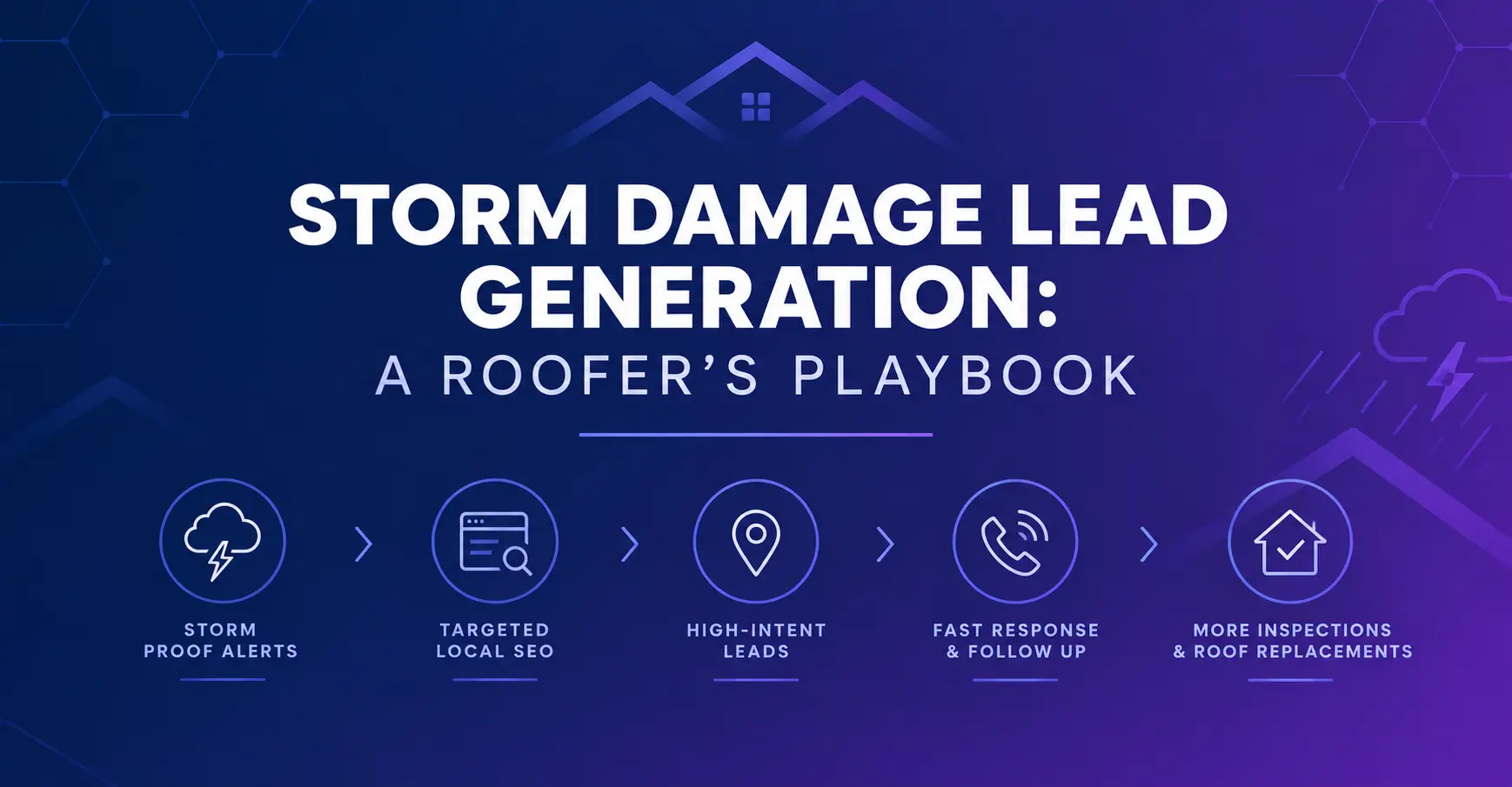
- Get a Storm Damage Inspection
- Talk to a Roofing Specialist
Your CTA should match the visitor’s intent. For example, a storm damage page should not only say “Contact Us.” A more relevant CTA is:
Schedule Your Storm Damage Inspection
Specific CTAs usually create less friction because visitors understand exactly what happens next.
3. Mobile-Friendly Design
A large percentage of local searches happen on mobile devices. Your roofing website must therefore work smoothly on smartphones and tablets. A mobile-friendly website should have:
- Easy-to-read text
- Large tap-friendly buttons
- Simple navigation
- Fast-loading images
- Short forms
- Click-to-call functionality
- Proper spacing between elements
One common mistake I see is designing the desktop version first and treating mobile as an afterthought. That approach can create serious usability problems.
Your mobile visitor should be able to find your phone number, service information, location, and estimate form without excessive scrolling or zooming.
4. Dedicated Roofing Service Pages
Do not place every service on one generic page. Create dedicated pages for important services such as:
- Roof Repair
- Roof Replacement
- New Roof Installation
- Emergency Roof Repair
- Storm Damage Roof Repair
- Hail Damage Roof Repair
- Commercial Roofing
- Roof Inspection
- Gutter Services
Each page should target a specific search intent. For example, a storm damage page can explain the inspection process, common damage types, insurance considerations, service areas, and the next step for homeowners. This structure also creates more opportunities for organic search visibility.
5. Location-Specific Information
Roofing companies depend heavily on local customers. Your website should clearly explain the areas you serve. However, avoid creating dozens of nearly identical location pages just to insert city names.
Instead, create useful location pages when there is genuine value for customers. A strong location page can include:
- Areas served
- Local roofing problems
- Relevant services
- Customer testimonials
- Project examples
- Local contact information
- Directions or service coverage
- Relevant FAQs
This supports local SEO for roofers while also helping potential customers determine whether your company serves their area.
6. Trust Signals That Reduce Customer Hesitation
Roofing is a high-value service. Homeowners want to know they are dealing with a legitimate and reliable contractor. Your website should make trust visible. Useful trust signals include:
- Customer reviews
- Testimonials
- Licensing information where applicable
- Insurance information
- Warranties
- Certifications
- Years of experience
- Before-and-after projects
- Real team photos
- Local business information
- Financing information when offered
Do not hide these details on a single About page. Place relevant trust signals near important conversion points. For example, a short testimonial next to an estimate form can reduce hesitation at exactly the right moment.
7. Real Project Photos
Stock photography can make a roofing website feel generic. Real project images can demonstrate your experience much more effectively. Use high-quality photos of:
- Completed roof replacements
- Roof repairs
- Storm damage
- Installation work
- Crews working on projects
- Before-and-after results
Add descriptive image filenames and useful ALT text. For example:
Filename: roof-replacement-project-dallas.jpg
ALT: Roof replacement project completed by local roofing contractor
Do not stuff keywords into every image ALT attribute. Describe the image naturally and accurately.
8. Simple Lead Forms
Long forms can discourage visitors from contacting your company. A basic estimate form may only need information such as
- Name
- Phone
- Service needed
- Property location
You can collect additional information later if necessary. The form should also clearly explain what happens after submission. For example: Submit your request and our roofing team will contact you to discuss your project. That small message can make the process feel more predictable.
9. Fast Website Performance
A slow website creates a poor user experience and can reduce conversions. Large images, unnecessary scripts, excessive plugins, poor hosting, and unoptimized code can all contribute to slow loading. Focus on practical improvements such as:
- Compressing images
- Using modern image formats
- Reducing unnecessary scripts
- Improving hosting performance
- Limiting excessive plugins
- Using browser caching
- Optimizing mobile performance
Google’s Page Experience guidance can also help you evaluate important aspects of website usability and performance.
What Should a Roofing Website Homepage Include?
A high-converting roofing homepage does not need to be complicated. A practical structure looks like this:
Hero Section
Clear service and location statement with a strong CTA.
Trust Section
Reviews, certifications, warranties, or other legitimate credibility signals.
Services Section
Links to your most important roofing services.
Why Choose Us
Explain what genuinely differentiates your company.
Project Gallery
Show real roofing projects whenever possible.
Service Areas
Clearly explain where you work.
Testimonials
Use authentic customer feedback.
FAQ Section
Answer common questions before visitors contact you.
Final CTA
Give visitors one clear next step. This structure helps visitors move naturally from understanding your company to taking action.
How Should Roofing Service Pages Be Designed?
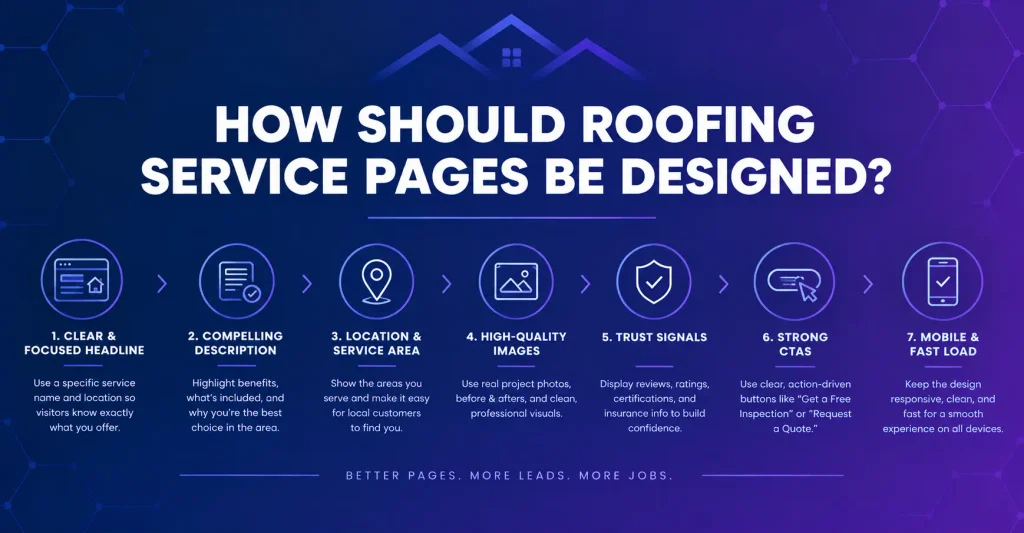
A service page should be built around one primary customer intent. For example, a roof repair page could follow this structure:
H1: Roof Repair in [Location]
Start with a direct explanation of the service. Then explain common roof problems, signs of damage, your repair process, relevant proof, FAQs, and the next step. A strong service page should answer:
- What problem does this service solve?
- Who provides the service?
- What does the process involve?
- Why should customers choose this company?
- What should the visitor do next?
Avoid filling the page with unnecessary marketing language. The visitor wants useful information and confidence that your company can solve the problem.
Should You Redesign Your Roofing Website or Build a New One?
Not every outdated roofing website needs to be completely rebuilt. Sometimes a redesign is enough. A redesign may make sense when your existing website has useful content, backlinks, rankings, and established pages but suffers from poor UX or outdated visuals.
A new website may be more appropriate when the current site has serious technical problems, poor architecture, broken functionality, weak content, or an outdated platform that limits improvements.
Before making the decision, review
- Organic traffic
- Existing rankings
- Backlinks
- Conversion data
- Page performance
- Mobile usability
- Technical issues
- Existing URLs
- Valuable service pages
Do not remove successful pages or change URLs without a migration plan. A poorly planned redesign can damage existing SEO visibility.
What Is a Good Roofing Website Conversion Rate?
There is no single conversion rate that every roofing website should target. Results vary based on traffic source, location, service type, offer, website quality, and visitor intent.
For example, someone searching for “emergency roof repair near me” has stronger immediate intent than someone reading a general roofing guide. Instead of focusing only on one industry-wide percentage, track your own website performance over time.
Important metrics include:
- Form submissions
- Phone calls
- Estimate requests
- Qualified leads
- Booking requests
- Conversion rate
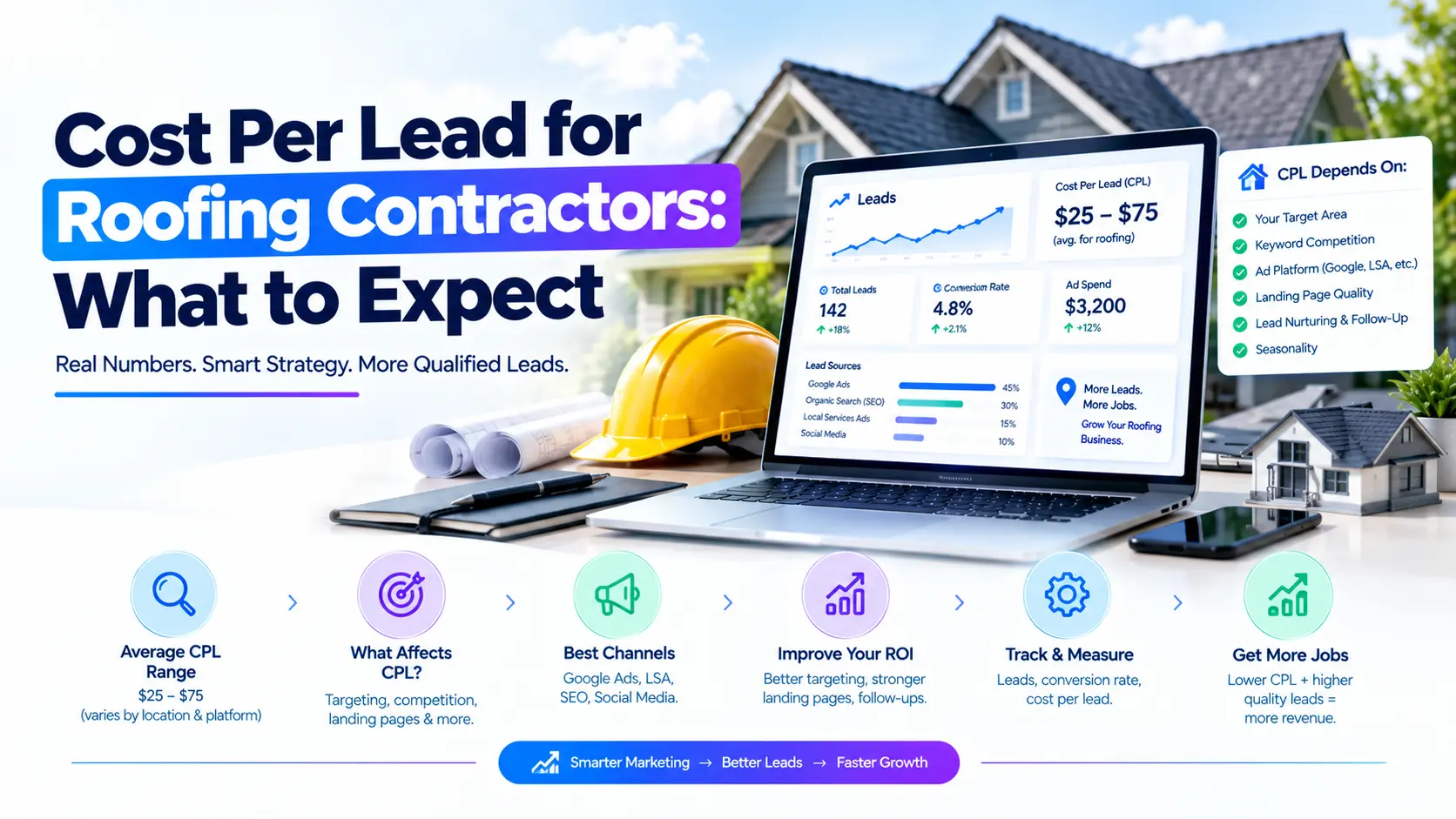
- Cost per lead
- Lead-to-customer rate
The most important question is not simply how many people converted. It is whether the website generated qualified roofing leads that became customers.
How Does Roofing Website Design Support SEO?
Good design and SEO should work together. A visually attractive website can still perform poorly in search if it has weak content, poor architecture, slow performance, or confusing navigation.
Your roofing website should have:
- Clear page hierarchy
- Descriptive URLs
- Relevant service pages
- Useful location content
- Internal links
- Optimized images
- Helpful FAQs
- Mobile-friendly layouts
- Fast-loading pages
- Descriptive title tags
- Strong meta descriptions
Internal links should connect related topics naturally. For example, a roof repair page could link to a storm damage service page and a related roofing lead-generation resource. This helps users discover relevant information while giving search engines more context about your website structure.
Why Internal Linking Matters for Roofing Websites
Internal links are often overlooked during website design. Suppose you publish pages about:
- Roof repair
- Storm damage
- Roof replacement
- Local SEO
- Roofing lead generation
These pages should not exist as isolated URLs. Connect them where the relationship makes sense.
For example:
Roofing lead generation can link to your local SEO strategy. A storm damage page can link to your storm damage lead generation guide. A service page can link to relevant FAQs and related services. This creates a stronger information architecture and helps visitors continue their journey through your website.
How Can Roofers Test and Improve Website Conversions?
Do not assume that your first website design is the final version. Conversion optimization should be an ongoing process. Start by reviewing analytics and conversion data. Look for pages that receive significant traffic but generate few leads.
Then test specific elements such as
- CTA wording
- CTA placement
- Form length
- Headline clarity
- Trust signals
- Service-page structure
- Mobile navigation
- Contact options
- Page speed
For example, if a service page receives hundreds of visits but very few estimate requests, test a stronger CTA and simplify the contact process.
Make one meaningful change at a time when possible. That makes it easier to understand what actually improved performance.
Common Roofing Website Design Mistakes to Avoid
Even experienced roofing companies can make website mistakes.
Using Too Much Industry Jargon
Homeowners may not understand technical roofing terminology. Use simple language and explain specialized terms when they matter.
Hiding the Phone Number
If phone calls are important to your business, make the phone number easy to find. It should be visible on desktop and easy to tap on mobile.
Using Generic Stock Photos
Generic images do not demonstrate your actual experience. Use authentic project photography whenever possible.
Creating One Page for Every Service
More pages do not automatically mean better SEO. Every page should have a clear purpose and provide unique value.
Making the Website About the Company Instead of the Customer
Your visitors care about solving their roofing problem. Explain your experience, but connect it to the customer’s needs.
Weak Calls to Action
“Learn More” may not be enough for someone ready to hire a roofer. Use action-oriented CTAs that communicate the next step.
Ignoring Mobile Users
A website that looks excellent on a desktop can still perform poorly on smartphones. Always test important pages on real mobile devices.
Ignoring Conversion Tracking
Without tracking, you cannot confidently determine which pages and campaigns generate leads. Set up proper tracking for forms, calls, and other meaningful actions.
How Much Does Roofing Website Design Cost?
Roofing website design costs vary widely depending on the website’s size, functionality, platform, content requirements, SEO needs, and development complexity.
A basic brochure-style website will generally require less investment than a custom website with extensive service pages, location pages, advanced forms, integrations, conversion tracking, and ongoing SEO.
Instead of choosing a website provider based only on price, consider the potential business value. A cheap website that generates little business can become expensive over time. A conversion-focused website should be evaluated based on factors such as:
- Lead-generation potential
- SEO structure
- Mobile usability
- Performance
- Content quality
- Conversion tracking
- Scalability
- Ongoing maintenance
The right investment depends on your goals and market.
Roofing Website Design and Google Business Profile
Your website should support your Google Business Profile rather than operate separately from it. Your Google Business Profile can help customers discover your roofing company in local searches and Google Maps. Your website should provide consistent business information and relevant service details.
Make sure your business name, phone number, service information, and location details are accurate and consistent. You should also connect relevant website pages to your local marketing strategy. For example, a roof repair service page can support searches related to roof repair in your service area.
How Can Website Design Support Google Local Services Ads?
Google Local Services Ads can help eligible roofing businesses appear prominently for relevant local searches. However, getting the click is only part of the process. The landing experience still matters. If an advertising visitor reaches a slow or confusing website, you may lose an otherwise valuable lead.
Your website should reinforce the promise made in the advertisement. If the ad promotes emergency roof repair, the landing page should immediately explain your emergency service and provide an easy way to contact you. This is where roofing website design becomes part of the larger customer acquisition system.
How Roofing Website Design Works With SEO and Paid Ads
Your website is the destination for many marketing channels. A potential customer might discover your company through:
- Google organic search
- Google Maps
- Local Services Ads
- Google Ads
- Social media
- Referral traffic
- Direct searches
Each channel can send visitors to different pages. That means your website architecture should support multiple customer journeys. Someone searching for “roof replacement” should reach a relevant replacement page.
Someone searching for “hail damage roof repair” should reach a relevant storm or hail damage page. Sending every visitor to the homepage can create unnecessary friction.
Roofing Website Design Should Build Trust Before Asking for the Lead
People rarely contact a roofing company simply because the website looks attractive. They contact a company when they feel confident that the business can solve their problem. That confidence comes from evidence.
Show visitors:
- Real projects
- Customer reviews
- Relevant experience
- Service information
- Warranties
- Certifications
- Clear contact details
- Transparent next steps
Do not make unsupported claims. If you say you are “the best roofer in the city,” explain what evidence supports that statement. Specific proof is more convincing than generic marketing claims.
What Makes a Roofing Website Stand Out From Competitors?
A roofing website does not need flashy animations to stand out. It needs to be more useful and trustworthy. Look for opportunities to answer questions competitors ignore.
You could explain:
- What happens during a roof inspection
- How storm damage is documented
- What homeowners should do after a hailstorm
- How long common roofing projects take
- What warning signs require professional attention
- What customers should ask before hiring a contractor
This type of content can support SEO while also demonstrating expertise. The strongest websites often win because they reduce uncertainty.
Frequently Asked Questions
What is the most important part of roofing website design?
The most important part is creating a clear path from visitor intent to action. Your website should explain your service, build trust, and make contacting your company easy.
How can a roofing website generate more leads?
Use clear service pages, strong CTAs, trust signals, mobile-friendly design, fast performance, simple forms, and conversion tracking.
Should a roofing company have separate service pages?
Yes. Important services should usually have dedicated pages when they represent different customer needs and search intents.
Is mobile-friendly roofing website design important?
Yes. Many potential customers search for local services on smartphones. Your website should be easy to navigate, read, and contact from a mobile device.
How many CTAs should a roofing website have?
There is no fixed number. Use CTAs where they naturally support the visitor’s next step without making the page feel aggressive or repetitive.
Does roofing website design affect SEO?
Yes. Website structure, mobile usability, page speed, navigation, internal linking, and content organization can all influence the overall search experience.
Should roofing companies use stock photos?
Stock photos can be useful in some situations, but authentic project photos usually provide stronger proof of real experience.
How often should a roofing website be updated?
Review the website regularly and update outdated service information, project examples, FAQs, contact details, and important SEO elements. Larger changes should be based on performance data.
Final Thoughts: Build a Roofing Website That Converts
A successful roofing website should not be designed simply to look impressive. It should help the right visitors find the right information, trust your company, and take action.
The strongest roofing website design strategies combine conversion-focused layouts with useful content, local SEO, mobile usability, strong trust signals, fast performance, and clear calls to action.
Start with the customer journey. Ask what a homeowner needs to know before requesting an estimate. Then build your website around those questions.
When your website supports both search visibility and customer decision-making, it can become one of your most valuable roofing lead-generation assets. The goal is not to create a website that simply receives traffic.
The goal is to turn relevant traffic into qualified roofing opportunities.