Introduction
If you’ve ever wondered why some websites dominate Google while others struggle to attract visitors, the answer often lies in a well-planned SEO strategy.
Many businesses publish blog posts, optimize a few pages, and hope rankings improve. In my experience working on SEO campaigns across different industries, I’ve seen that this scattered approach rarely delivers consistent results. The websites that achieve long-term success follow a structured, data-driven process rather than relying on guesswork.
Learning how to build a winning SEO strategy from scratch is no longer just about ranking higher on Google. Today’s search landscape includes AI-powered search experiences, answer engines, voice assistants, and generative search results. Your strategy must be built for both traditional search engines and AI-driven discovery.
This comprehensive guide will show you how to create a scalable SEO strategy that increases organic traffic, improves search engine rankings, strengthens website authority, and drives measurable business growth. Whether you’re launching a new website or improving an existing one, you’ll learn a practical framework that combines proven SEO fundamentals with modern techniques such as semantic SEO, generative engine optimization (GEO), answer engine optimization (AEO), and AI search optimization.
By the end of this guide, you’ll have a complete roadmap for planning, implementing, and measuring a successful search engine optimization strategy from the ground up.
Featured Snippet Answer
How to Build a Winning SEO Strategy From Scratch
To build a winning SEO strategy from scratch, begin by defining clear business goals, understanding your audience, conducting comprehensive keyword research, analyzing competitors, creating topic clusters, optimizing on-page and technical SEO, building high-quality backlinks, and continuously tracking performance using Google Search Console and Google Analytics. A successful strategy also prioritizes user experience, E-E-A-T, semantic SEO, and AI search optimization to achieve sustainable organic growth.
Why Every Website Needs an SEO Strategy
Many website owners mistakenly believe that publishing content regularly is enough to achieve high rankings. While consistency matters, content without strategy often results in wasted effort.
Think of SEO as building a house.
Without a blueprint, construction becomes disorganized. Rooms may connect poorly; resources may be wasted, and later structural issues may arise. The same principle applies to SEO. Publishing pages without a clear roadmap creates duplicate content, keyword cannibalization, weak internal linking, and inconsistent authority.
A comprehensive SEO planning process aligns every optimization effort with your broader business objectives.
Instead of asking:
“What should we publish next?”
Successful businesses ask:
“What content will move us closer to our SEO goals while satisfying user intent?”
That mindset shift makes all the difference.
A structured SEO framework helps you:
- Increase qualified organic traffic
- Improve search engine rankings
- Build topical authority
- Strengthen website authority
- Create scalable content systems
- Improve conversion rates
- Reduce dependence on paid advertising
- Generate consistent long-term leads
The most successful websites don’t treat SEO as a checklist. They view it as a long-term business strategy.
What Is an SEO Strategy?
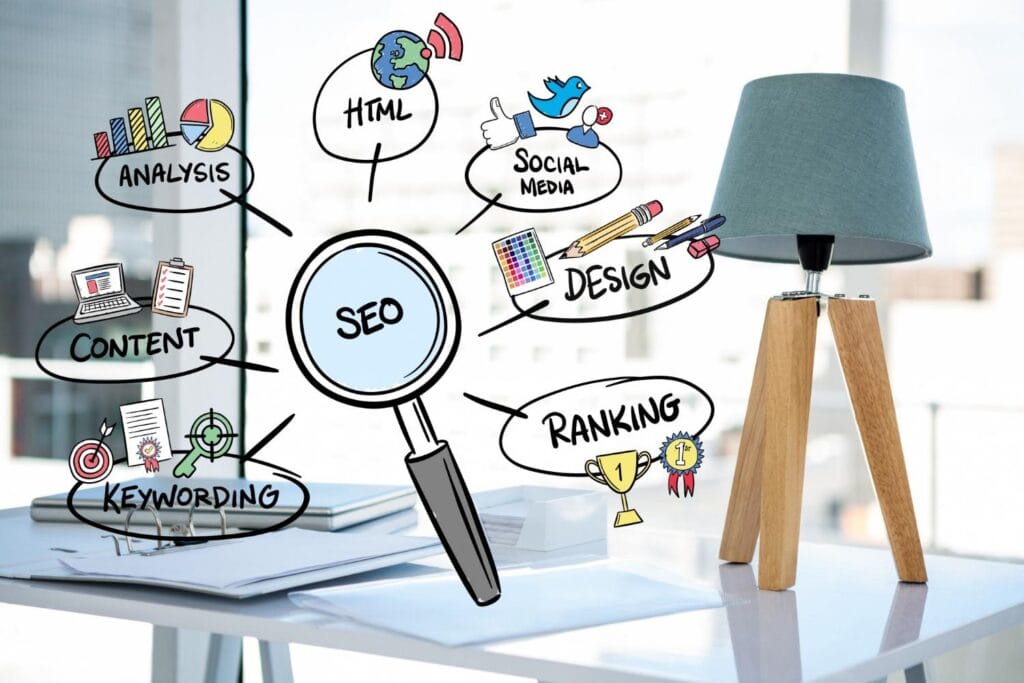
An SEO strategy is a long-term plan that outlines how a website will improve its visibility in search engines while attracting the right audience through valuable, relevant, and optimized content.
Rather than focusing on isolated tactics, an effective strategy integrates every major SEO discipline into one cohesive system, including:
- Keyword research
- Content strategy
- On-page SEO
- Technical SEO
- Off-page SEO
- Internal linking
- User experience
- Website performance
- Content optimization
- Performance tracking
In my experience, businesses often jump straight into writing blog posts before establishing this foundation. As a result, they publish dozens of articles that compete with one another instead of reinforcing topical authority.
A winning strategy ensures every page has a clear purpose, supports your business goals, and contributes to overall organic visibility.
SEO Strategy vs SEO Plan vs SEO Tactics
These terms are often used interchangeably, but they serve different purposes.
| Component | Purpose | Example |
| SEO Strategy | Long-term vision | Become the leading resource for digital marketing in your niche. |
| SEO Plan | Execution roadmap | Publish four pillar articles and eight supporting blogs each month. |
| SEO Tactics | Individual actions | Optimize title tags, improve Core Web Vitals, and build backlinks. |
Think of it like this:
- Strategy decides where you’re going.
- Planning decides how you’ll get there.
- Tactics describe what you’ll do today.
Without strategy, tactics become random.
Without planning, execution becomes inconsistent.
Without tactics, strategy never becomes reality.
The Core Components of a Winning SEO Strategy
A modern SEO strategy consists of several interconnected pillars. Each one supports the others, creating a strong foundation for long-term growth.
| SEO Component | Primary Objective |
| SEO Goals | Align SEO with business outcomes. |
| Audience Research | Understand user needs and behavior. |
| Keyword Research | Identify valuable search opportunities. |
| Search Intent Analysis | Match content with user expectations. |
| Competitor Analysis | Discover gaps and opportunities. |
| Content Strategy | Build topical authority. |
| Technical SEO | Improve crawlability and indexing. |
| On-Page SEO | Optimize content relevance. |
| Off-Page SEO | Build trust and authority. |
| User Experience | Increase engagement and conversions. |
| AI SEO & GEO | Optimize for AI-powered search. |
| SEO Performance Tracking | Measure ROI and continuous improvement. |
Each pillar plays a unique role, but they work best as part of a unified system rather than as standalone initiatives.
Step 1: Define Clear SEO Goals
Before researching keywords or creating content, establish what success looks like for your business.
One of the biggest mistakes I see is chasing rankings without understanding how those rankings support broader business objectives.
Instead of focusing solely on metrics like impressions or keyword positions, define goals that connect SEO efforts to measurable outcomes.
Examples include:
- Increase organic traffic by 40% within twelve months.
- Generate 200 qualified leads per month.
- Improve conversion rates from organic visitors.
- Grow topical authority within your niche.
- Rank in the top three positions for high-intent keywords.
- Increase revenue from organic search.
A useful framework is to create SMART goals that are
- Specific
- Measurable
- Achievable
- Relevant
- Time-bound
Example
Instead of saying
“Increase website traffic.”
Use:
“Increase organic traffic by 35% over the next nine months by publishing twelve pillar pages and sixty supporting articles targeting commercial-intent keywords.”
This level of clarity makes prioritization, resource allocation, and performance measurement much easier.
Align SEO Goals with Business Objectives
SEO should never operate in isolation.
Ask questions like:
- Are you trying to generate leads?
- Increase online sales?
- Build brand awareness?
- Grow local visibility?
- Expand internationally?
- Improve customer retention?
Your answers influence:
- Keyword selection
- Content formats
- Landing pages
- Conversion optimization
- Link-building priorities
- Performance metrics
For example, an eCommerce business may prioritize product pages and transactional keywords, while a B2B SaaS company may focus on educational pillar content that nurtures prospects through longer buying cycles.
Step 2: Understand Your Audience and Search Intent
A successful SEO strategy starts with understanding the people behind the searches.
Google’s algorithms increasingly reward websites that satisfy user intent rather than simply matching keywords. This means your content must answer real questions, solve real problems, and align with where users are in their decision-making journey.
Build Detailed Audience Personas
Creating audience personas helps you tailor your SEO efforts to the right people. Consider factors such as:
- Demographics (age, location, occupation)
- Industry or niche
- Pain points and challenges
- Goals and motivations
- Preferred content formats
- Devices used (desktop vs. mobile)
- Search behavior
For example, a beginner searching for “SEO strategy” needs foundational guidance, while a marketing manager may seek advanced frameworks, automation tools, or AI SEO techniques. Addressing these differences improves relevance and engagement.
Understand Search Intent
Every search query reflects an underlying purpose. Matching content to that purpose is essential for ranking and user satisfaction.
Search intent generally falls into four main categories
| Search Intent | User Goal | Example Query |
| Informational | Learn something | How to build an SEO strategy |
| Navigational | Find a specific website. | Google Search Console login |
| Commercial Investigation | Compare options | Best SEO tools for beginners |
| Transactional | Take action. | Buy SEO software. |
When planning content, ask yourself:
- What question is the user trying to answer?
- What problem are they trying to solve?
- What type of content already ranks for this keyword?
- What additional value can I provide beyond the current top results?
Why Search Intent Matters
I’ve seen websites publish technically sound articles that never rank because they target the wrong intent. For instance, creating a product-focused page for an informational keyword often leads to poor engagement and lower rankings.
Instead, align each page with the dominant intent behind the target keyword. If users want a step-by-step guide, provide a comprehensive tutorial. If they’re comparing tools, create an unbiased comparison. Meeting user expectations builds trust, improves engagement metrics, and increases the likelihood of earning featured snippets and AI-generated citations.
Key Takeaways
By this point, you’ve established the strategic foundation needed to build a successful SEO campaign:
- You understand why an SEO strategy is essential for long-term growth.
- You know the difference between strategy, planning, and tactics.
- You’ve identified the core pillars of a modern SEO framework.
- You’ve learned how to define measurable SEO goals.
- You’ve explored the importance of audience research and search intent.
Build the Foundation of Your SEO Strategy
At this stage, you’ve defined your SEO goals, identified your audience, and understood the importance of search intent. Now it’s time to build the engine that powers your entire SEO strategy: keyword research, competitor analysis, and content architecture.
In my experience, this is where many SEO campaigns either succeed or fail. Businesses often rush into creating content without validating demand, understanding the competition, or organizing their website around clear topical themes. As a result, they publish dozens of articles that struggle to rank because they lack strategic direction.
The following framework will help you create a scalable content ecosystem that supports long-term organic growth and establishes your website as a trusted authority.
Step 3: Conduct Comprehensive Keyword Research
Keyword research is the process of discovering the words and phrases your target audience uses when searching online. It forms the backbone of every successful search engine optimization strategy because it ensures you’re creating content that people are actively looking for.
However, keyword research in 2026 is no longer about finding the highest search volume. Search engines have become much better at understanding context, relationships between topics, and user intent. Modern SEO focuses on building topical authority by covering subjects comprehensively rather than targeting isolated keywords.
Why Keyword Research Matters
Effective keyword research helps you:
- Understand your audience’s needs.
- Discover high-value content opportunities.
- Prioritize topics with realistic ranking potential.
- Drive qualified organic traffic.
- Improve Google search rankings.
- Support content optimization and SEO content planning.
- Create a scalable SEO roadmap.
Without proper keyword research, you’re essentially creating content based on assumptions rather than real search behavior.
Start with Seed Keywords
Seed keywords are broad terms related to your niche. They serve as the starting point for discovering more specific keyword opportunities.
For example, if you run an SEO agency, your seed keywords might include:
- SEO strategy
- Keyword research
- Technical SEO
- On-page SEO
- Content marketing
- Link building
- SEO audit
- Website optimization
- Google Search Console
- Organic traffic
From these broad topics, you can uncover hundreds of related keywords and questions.
Expand into Long-Tail Keywords.
Long-tail keywords are longer, more specific search queries. Although they typically have lower search volume, they often convert better because they reflect a clearer user intent.
For example:
| Broad Keyword | Long-Tail Keyword |
| SEO strategy | How to build an SEO strategy for a new website |
| Technical SEO | Technical SEO checklist for beginners |
| Content marketing | Content marketing strategy for B2B SaaS |
| Keyword research | Best keyword research tools for small businesses |
| Link building | White hat link-building techniques in 2026 |
Long-tail keywords generally offer:
- Lower competition.
- Higher conversion potential.
- Better alignment with specific user needs.
- Faster ranking opportunities for newer websites.
In my own projects, targeting clusters of long-tail keywords has consistently produced stronger results than chasing a handful of highly competitive head terms.
Prioritize Search Intent Over Search Volume
A keyword with 500 monthly searches and strong commercial intent is often more valuable than one with 10,000 searches but vague intent.
Before selecting a keyword, ask:
- What is the user trying to accomplish?
- What stage of the buyer journey are they in?
- What type of content currently ranks?
- Can I provide a better answer?
For example, a user searching for “How to Build a Winning SEO Strategy From Scratch” is looking for a detailed, educational guide. A short promotional page would not satisfy that intent and is unlikely to rank well.
Evaluate Keyword Difficulty
Keyword difficulty estimates how challenging it may be to rank for a particular term.
When assessing competition, consider:
- Domain authority of top-ranking websites.
- Quality and depth of competing content.
- Number and quality of backlinks.
- Search intent alignment.
- Existing topical authority.
- SERP features such as AI Overviews, featured snippets, and People Also Ask.
New websites should initially target lower-competition opportunities while gradually building authority for more competitive keywords.
Build a Keyword Map
A keyword map assigns a primary keyword and supporting semantic keywords to each page on your website. This prevents keyword cannibalization and ensures every page serves a unique purpose.
Example Keyword Map
| Page | Primary Keyword | Supporting Keywords |
| Pillar Guide | How to Build a Winning SEO Strategy From Scratch | SEO strategy, SEO planning, SEO roadmap |
| Blog Post | Keyword Research Guide | Keyword research, target keywords, long-tail keywords |
| Blog Post | Technical SEO Checklist | Technical SEO, crawlability, XML sitemap |
| Blog Post | On-Page SEO Guide | On-page SEO, content optimization, internal linking |
A structured keyword map also makes future content planning much easier.
Use Keyword Research Tools
While experience and intuition are valuable, data-driven decisions produce better outcomes. Consider using tools such as
- Google Keyword Planner
- Google Search Console
- Google Trends
- Ahrefs
- Semrush
- Moz
- Screaming Frog SEO Spider
- Keyword Insights
- Also Asked
- AnswerThePublic
Each tool provides different insights, from search volume and keyword difficulty to user questions and content gaps.
Step 4: Analyze Your Competitors
Competitor analysis isn’t about copying what others are doing. It’s about identifying what’s working, uncovering gaps, and finding opportunities to create something better.
In my experience, analyzing competitors before publishing new content often reveals untapped opportunities that keyword research alone may miss.
Identify Your True SEO Competitors
Your SEO competitors may be different from your direct business competitors.
For example, a local digital marketing agency may compete with:
- Industry blogs.
- Educational websites.
- SaaS companies.
- Online publications.
- Freelancers.
- YouTube creators.
Search for your target keywords and identify the websites consistently appearing on the first page.
These are the competitors you should study.
Evaluate Competitor Content
Review their top-performing pages and ask:
- Which topics generate the most traffic?
- How comprehensive is the content?
- What questions do they answer?
- What multimedia elements are included?
- How frequently is the content updated?
- Which pages attract backlinks?
- What information is missing?
The objective isn’t to replicate their content. Instead, create a resource that’s more current, more comprehensive, and more useful.
Perform a Content Gap Analysis
Content gap analysis identifies topics your competitors cover that your website doesn’t.
Common opportunities include:
- Beginner guides.
- Industry statistics.
- Case studies.
- Tutorials.
- Templates.
- Checklists.
- FAQs.
- Comparison articles.
- Tool reviews.
- Emerging AI SEO topics.
Covering these gaps helps strengthen your topical authority and expand your website’s visibility across a broader range of search queries.
Analyze Competitor Backlinks
High-quality backlinks remain one of the strongest ranking signals.
Review where competitors earn their links from:
- Industry publications.
- Resource pages.
- Guest posts.
- Podcasts.
- Research reports.
- Business directories.
- University websites.
- Government resources.
- Digital PR campaigns.
Rather than pursuing every backlink opportunity, prioritize links that are relevant, authoritative, and earned through valuable content.
Learn from SERP Features
Modern search results include much more than traditional blue links.
Analyze whether your target keywords trigger:
- AI Overviews.
- Featured Snippets.
- People Also Ask.
- Video results.
- Image packs.
- Local Packs.
- Knowledge Panels.
Optimizing for these features increases your visibility even if you’re not ranked first organically.
Step 5: Build Topic Clusters and Pillar Pages
One of the biggest shifts in modern SEO is moving from individual keywords to interconnected topics.
Google increasingly favors websites that provide comprehensive coverage of a topic instead of relying on standalone articles.
This is where topic clusters become essential.
What Is a Topic Cluster?
A topic cluster is a collection of related articles connected through strategic internal linking.
It consists of:
- One comprehensive pillar page.
- Multiple supporting articles.
- Strong contextual internal links.
Together, these pages create a structured knowledge hub that signals expertise to both users and search engines.
What Is Pillar Content?
Pillar content is a comprehensive resource covering a broad topic in depth.
Examples include:
- Complete SEO Guide
- Technical SEO Guide
- Keyword Research Guide
- Content Marketing Strategy
- Local SEO Guide
- Link Building Guide
Supporting articles then explore individual subtopics in greater detail.
Example SEO Topic Cluster
| Pillar Page | Supporting Articles |
| How to Build a Winning SEO Strategy From Scratch | Keyword Research Guide |
| Technical SEO Checklist | |
| On-Page SEO Best Practices | |
| Internal Linking Strategy | |
| Core Web Vitals Guide | |
| SEO Content Calendar | |
| Link Building Strategies | |
| Google Search Console Tutorial | |
| Semantic SEO Explained | |
| GEO vs AEO vs Traditional SEO |
This structure creates semantic relationships that improve both user navigation and search engine understanding.
Benefits of Topic Clusters
A well-organized content cluster can:
- Improve website crawlability.
- Strengthen internal linking.
- Increase topical authority.
- Reduce keyword cannibalization.
- Enhance user experience.
- Improve ranking potential for competitive keywords.
- Increase time on site.
- Support AI search systems in understanding your expertise.
Instead of competing with yourself, every page reinforces the authority of the entire cluster.
Create a Logical Internal Linking Structure
Internal links help distribute authority across your website while guiding users to related content.
A strong internal linking framework should connect:
- Pillar pages to supporting articles.
- Supporting articles back to pillar pages.
- Related supporting articles to one another where relevant.
For example, a guide on Technical SEO should naturally link to content about XML Sitemaps, Robots.txt, Core Web Vitals, and Website Crawlability. This creates a connected content ecosystem that improves navigation and helps search engines understand the relationships between topics.
Think Like an Authority, Not Just a Publisher
The ultimate goal isn’t to publish the most articles—it’s to become the most trusted resource in your niche.
When planning new content, ask yourself:
- Does this article support an existing pillar page?
- Does it answer a unique user question?
- Does it strengthen topical authority?
- Can it be connected through meaningful internal links?
- Does it provide value beyond what’s already ranking?
By approaching content as an interconnected knowledge base rather than isolated blog posts, you’ll create a website that’s easier for users to navigate, easier for search engines to understand, and better positioned to earn long-term rankings
Content Strategy, SEO Content Calendar & On-Page SEO Framework
By this point, you’ve established your SEO goals, researched keywords, analyzed competitors, and organized your website into topic clusters. The next step is transforming that research into content that consistently ranks, attracts qualified visitors, and converts them into customers.
In my experience, many businesses don’t struggle because they lack ideas—they struggle because they lack a repeatable content system. A strategic publishing framework ensures every article has a purpose, targets the right audience, and contributes to your long-term SEO strategy.
Step 6: Develop a Winning Content Strategy
A content strategy is the blueprint that guides what you publish, why you publish it, and how each piece supports your business objectives. Rather than creating articles randomly, a structured content strategy aligns every page with user intent, keyword opportunities, and your overall SEO roadmap.
High-performing websites don’t aim to publish the most content—they aim to publish the most valuable content.
An effective strategy should answer these questions:
- Who is the target audience?
- What problems are they trying to solve?
- Which keywords and topics matter most?
- What stage of the buyer journey does the content address?
- How will success be measured?
When these questions are answered before writing begins, your content becomes more focused, more useful, and more likely to earn rankings.
Build Content Around the Customer Journey
Different users require different types of information depending on where they are in the decision-making process. Aligning content with the customer journey helps you attract visitors at every stage.
| Buyer Stage | User Goal | Recommended Content |
| Awareness | Learn about a problem | Educational guides, blog posts, industry statistics |
| Consideration | Compare solutions | Comparison articles, case studies, expert reviews |
| Decision | Choose a provider or product | Service pages, product pages, testimonials, pricing guides |
| Retention | Maximize value | Tutorials, FAQs, updates, advanced guides |
Someone who searches “What is an SEO strategy?” is generally exploring available information, while searching for “Best SEO agency for SaaS companies” indicates the user is closer to making a buying decision.
Create Content That Demonstrates Expertise
Google’s quality systems increasingly favor content that demonstrates strong Experience, Expertise, Authoritativeness, and Trustworthiness (E-E-A-T).
To strengthen these signals:
- Share real-world experiences and lessons learned.
- Include practical examples and case studies.
- Reference reputable industry sources and research.
- Explain complex concepts in simple language.
- Keep content updated as search trends evolve.
I’ve found that articles enriched with firsthand insights and actionable advice consistently outperform generic summaries because they provide unique value that AI-generated content often lacks.
Diversify Your Content Formats
While long-form blog posts are essential for building topical authority, a well-rounded content strategy should include multiple formats to meet different user preferences.
Consider incorporating:
- Comprehensive pillar guides.
- Supporting blog posts.
- Step-by-step tutorials.
- Checklists.
- Templates.
- Case studies.
- Industry reports.
- Infographics.
- Videos.
- Interactive tools.
Repurposing a single pillar article into several complementary assets extends its reach and reinforces your expertise across different channels.
Step 7: Create an SEO Content Calendar
Publishing high-quality content consistently is far more effective than publishing sporadically.
An SEO content calendar helps you organize topics, prioritize opportunities, and maintain a steady publishing cadence.
Benefits of a Content Calendar
A structured calendar enables you to:
- Maintain consistency.
- Avoid duplicate topics.
- Balance evergreen and trending content.
- Coordinate seasonal campaigns.
- Support topic clusters.
- Allocate resources efficiently.
- Monitor publishing frequency.
Instead of asking, “What should we write this week?” Your team always works with a well-defined roadmap.
Example Monthly SEO Content Calendar
| Week | Content Type | Primary Goal |
| Week 1 | Pillar Article | Build topical authority |
| Week 2 | Supporting Guide | Target long-tail keywords |
| Week 3 | Case Study | Build trust and authority |
| Week 4 | Comparison Article | Capture commercial intent |
This balanced approach ensures your website serves users at different stages of the buying journey while strengthening your overall content ecosystem.
Prioritize Content Opportunities
Not every content idea deserves equal attention. Prioritize topics based on:
- Search intent.
- Business relevance.
- Keyword difficulty.
- Traffic potential.
- Conversion potential.
- Existing content gaps.
- Seasonal demand.
A practical scoring system can help determine which opportunities should be tackled first.
Step 8: Implement a Comprehensive On-Page SEO Framework
Once your content is planned, it’s time to optimize each page for both users and search engines.
On-page SEO involves optimizing the visible elements of a webpage to improve relevance, usability, and ranking potential.
Think of it as ensuring every page communicates its purpose clearly to visitors and search engines alike.
Craft High-Impact Titles
Your page title is usually the first element users notice in search results.
An effective title should:
- Include the primary keyword naturally.
- Communicate a clear benefit.
- Spark curiosity without being misleading.
- Stay within recommended character limits.
- Reflect the page’s search intent.
Example:
How to Build a Winning SEO Strategy From Scratch: A Complete Step-by-Step Guide
Write Compelling Meta Descriptions
Although meta descriptions aren’t a direct ranking factor, they strongly influence click-through rates.
A strong description should:
- Summarize the page accurately.
- Include the target keyword.
- Highlight the primary benefit.
- Encourage users to click.
Every page deserves a unique meta description tailored to its content.
Structure Content with Clear Headings
A logical heading hierarchy improves readability and helps search engines understand page structure.
Use:
- One H1 for the primary topic.
- H2s for major sections.
- H3s for supporting ideas.
- H4s where additional detail is needed.
Avoid using headings purely for styling. Every heading should clearly introduce a valuable section of your content.
Optimize Content for Readability
Even comprehensive guides should be easy to scan.
Improve readability by:
- Writing concise paragraphs.
- Using descriptive subheadings.
- Including tables where comparisons help.
- Breaking down complex ideas into manageable sections.
- Using transition words to improve flow.
Content that is easier to read often leads to better engagement and lower bounce rates.
Use Keywords Naturally
Keyword optimization has evolved significantly.
Rather than repeating the same phrase excessively, focus on topical relevance and semantic relationships.
Your content should naturally include:
- Primary keyword.
- Related keywords.
- Synonyms.
- Questions users ask.
- Industry terminology.
- Entity relationships.
This approach supports semantic SEO and improves your chances of ranking for multiple related searches.
Optimize Images
Images enhance user experience, but they also contribute to SEO when properly optimized.
Best practices include:
- Descriptive file names.
- Keyword-relevant alt text.
- Compressed file sizes.
- Modern formats such as WebP.
- Responsive dimensions.
Optimized images improve accessibility while supporting page performance.
Strengthen Internal Linking
Internal links connect related pages and distribute authority throughout your website.
A strategic internal linking structure should:
- Point readers toward supporting resources.
- Reinforce topic clusters.
- Help search engines discover new pages.
- Improve navigation.
- Encourage longer sessions.
Use descriptive anchor text that accurately reflects the destination page rather than generic phrases such as “click here.”
Add External References
Linking to authoritative sources strengthens credibility and provides additional value for readers.
Consider referencing:
- Google Search Central documentation.
- Academic journals.
- Government publications.
- Industry research reports.
- Reputable organizations.
External references demonstrate that your content is grounded in reliable information rather than unsupported claims.
Optimize for Featured Snippets and AI Overviews
Modern search results increasingly surface concise answers directly on the results page.
Enhance your opportunities to appear in these search features by
- Providing clear definitions.
- Using numbered processes.
- Answering questions immediately after headings.
- Including comparison tables.
- Summarizing key points.
- Structuring content logically.
Well-organized pages are easier for both search engines and AI systems to interpret.
Incorporate Schema Markup
Structured data makes it easier for search engines to interpret and categorize your content.
Depending on the page type, consider implementing
- Article Schema.
- FAQ Schema.
- HowTo Schema.
- Organization Schema.
- Breadcrumb Schema.
- Speakable Schema where appropriate.
Although schema doesn’t guarantee rich results, it increases eligibility for enhanced search features.
Improve User Experience
Excellent content alone won’t achieve long-term success if visitors struggle to use your website.
Focus on:
- Fast-loading pages.
- Mobile responsiveness.
- Clear navigation.
- Readable typography.
- Accessible design.
- Minimal intrusive pop-ups.
- Logical page layouts.
Positive user experiences often lead to stronger engagement signals, which support long-term SEO performance.
On-Page SEO Checklist
Before publishing any page, confirm that you’ve completed the following:
| Task | Status |
| The primary keyword is included naturally. | ✓ |
| Search intent fully addressed | ✓ |
| Unique title tag written | ✓ |
| Compelling meta description created | ✓ |
| Logical heading hierarchy used | ✓ |
| Semantic keywords incorporated | ✓ |
| Internal links added | ✓ |
| External authoritative references included | ✓ |
| Images optimized with alt text | ✓ |
| Schema markup implemented | ✓ |
| Mobile experience tested | ✓ |
| Page speed reviewed | ✓ |
| Content proofread and updated | ✓ |
Completing this checklist consistently will improve the quality and optimization of every page you publish.
Common On-Page SEO Mistakes to Avoid
Even experienced marketers can overlook critical details. Watch out for these common mistakes:
Overusing Keywords
Excessive keyword repetition makes content harder to read and may reduce its overall quality. Write naturally and prioritize user value over keyword density.
Ignoring Search Intent
A page optimized for the wrong intent is unlikely to satisfy users or rank well, regardless of how well it’s optimized technically.
Weak Internal Linking
Publishing valuable content without connecting it to related pages limits discoverability and topical authority.
Duplicate Metadata
Using identical title tags or meta descriptions across multiple pages can create confusion for search engines and reduce click-through rates.
Publishing Without Optimization
Always review your on-page checklist before hitting publish. Small improvements across many pages often produce significant long-term gains.
Key Takeaways
You’ve now built the content and on-page foundation of your SEO strategy by learning how to
- Create a user-centered content strategy that supports your business objectives.
- Create an organized SEO content calendar for consistent publishing.
- Optimize every page using a comprehensive on-page SEO framework.
- Improve readability, user experience, and semantic relevance.
- Prepare your content for featured snippets, AI Overviews, and rich search results.
Technical SEO, Off-Page SEO, Local SEO, AI SEO, GEO, AEO, Semantic SEO & E-E-A-T.
At this point, you’ve built a solid SEO foundation by defining goals, conducting keyword research, analyzing competitors, creating topic clusters, and optimizing your content. However, even the best content can struggle to rank if search engines can’t crawl your website efficiently, if your site lacks authority, or if it isn’t optimized for modern AI-powered search experiences.
In my experience, websites often plateau because they focus exclusively on content while overlooking technical performance, authority building, and evolving search technologies. Today’s SEO success requires a holistic approach that combines technical excellence, trustworthy content, and optimization for both traditional search engines and AI-driven answer engines.
Step 9: Build a Strong Technical SEO Foundation
Technical SEO ensures that search engines can crawl, understand, index, and rank your website efficiently. Think of it as the infrastructure supporting every piece of content you publish.
Without a solid technical foundation, even outstanding articles may fail to reach their full ranking potential.
Why Technical SEO Matters
Technical SEO improves
- Website crawlability
- Website indexing
- Site architecture
- Mobile usability
- Page speed
- Core Web Vitals
- User experience
- Organic visibility
A technically healthy website allows search engines to spend more time discovering valuable content instead of encountering errors.
Improve Website Crawlability
Search engine bots must be able to navigate your website efficiently.
Best practices include
- Maintain a logical site hierarchy.
- Use descriptive URLs.
- Keep important pages within a few clicks of the homepage.
- Eliminate broken internal links.
- Fix redirect chains.
- Regularly audit crawl errors using Google Search Console.
A well-organized structure improves the experience for both users and search engines.
Optimize Website Indexing
It’s not necessary for every webpage to be visible in search results. Proper indexing ensures search engines focus on your most valuable content.
Review:
- Index coverage reports.
- Noindex directives.
- Canonical tags.
- Duplicate pages.
- Thin content.
Periodically checking indexed pages helps identify technical issues before they affect rankings.
Create and Maintain an XML Sitemap.
An XML sitemap acts as a roadmap for search engines by listing your important URLs.
A quality sitemap should:
- Include indexable pages only.
- Update automatically.
- Exclude duplicate URLs.
- Be submitted through Google Search Console.
Although search engines can discover pages through internal links, sitemaps improve efficiency, especially for large websites.
Configure Robots.txt Correctly
The Robots.txt file tells search engine crawlers which areas of your site should or shouldn’t be accessed.
Common uses include:
- Blocking administrative folders.
- Preventing duplicate content from being crawled.
- Protecting staging environments.
- Referencing your XML sitemap.
Always verify changes carefully. An incorrect Robots.txt configuration can accidentally block your entire website from being crawled.
Improve Core Web Vitals.
Google considers user experience signals when evaluating page quality.
Core Web Vitals measure
| Metric | Measures | Goal |
| Largest Contentful Paint (LCP) | Loading performance | Under 2.5 seconds |
| Interaction to Next Paint (INP) | Responsiveness | Under 200 milliseconds |
| Cumulative Layout Shift (CLS) | Visual stability | Below 0.1 |
Ways to improve these metrics include:
- Compressing images.
- Using modern image formats.
- Reducing unnecessary JavaScript.
- Implementing browser caching.
- Optimizing hosting performance.
- Using a content delivery network (CDN).
Faster websites generally lead to higher engagement and better conversion rates.
Ensure Mobile Optimization
Most searches now occur on mobile devices.
A mobile-friendly website should feature
- Responsive layouts.
- Readable font sizes.
- Clickable buttons.
- Fast loading speeds.
- Simple navigation.
Before publishing, check important pages on different screen sizes to ensure a consistent user experience.
Conduct Regular Technical SEO Audits
Routine technical audits help uncover hidden issues that may affect performance.
Check for:
- Broken links.
- Duplicate content.
- Redirect errors.
- Missing metadata.
- Slow pages.
- Structured data issues.
- Crawl errors.
- Security problems.
- HTTPS implementation.
Technical SEO isn’t a one-time project—it’s an ongoing maintenance process.
Step 10: Build Authority with Off-Page SEO
While on-page SEO tells search engines what your content is about, off-page SEO signals how trustworthy and authoritative your website is.
The strongest off-page ranking factor remains high-quality backlinks.
However, modern link building emphasizes earning links through value rather than manipulating rankings.
Develop a Sustainable Backlink Strategy
A successful backlink strategy focuses on relevance, quality, and editorial trust.
Effective techniques include:
- Creating original research.
- Publishing industry statistics.
- Writing comprehensive guides.
- Guest posting on reputable websites.
- Digital PR campaigns.
- Expert roundups.
- Resource page outreach.
- Building free tools.
- Producing shareable infographics.
In my experience, one authoritative backlink from a respected industry publication often provides more long-term value than dozens of low-quality directory links.
Focus on Link Quality Over Quantity.
Not every backlink carries equal weight.
Evaluate opportunities based on
- Topical relevance.
- Website authority.
- Editorial standards.
- Organic traffic.
- Link placement.
- User value.
Avoid shortcuts such as buying links or participating in link schemes, as these can violate search engine guidelines and lead to penalties.
Strengthen Brand Authority
Modern SEO extends beyond backlinks.
Google increasingly evaluates
- Brand mentions.
- Online reputation.
- Expert citations.
- Customer reviews.
- Social proof.
- Industry recognition.
Building a recognizable brand often leads to more natural backlinks and stronger long-term rankings.
Step 11: Optimize for Local SEO
If your business serves a specific geographic area, local SEO is essential.
Local optimization helps your website appear in map results, local packs, and location-based searches.
Optimize Your Business Profile
Ensure your business information is Accurate.
- Consistent across directories.
- Regularly updated.
Maintain consistency:
- Business name.
- Address.
- Phone number.
- Website URL.
- Business categories.
- Operating hours.
Maintaining consistency helps earn the trust of both users and search engines.
Encourage Customer Reviews
Positive reviews influence both rankings and customer confidence.
Encourage satisfied customers to leave honest reviews and respond professionally to all feedback.
Authentic engagement demonstrates credibility and strengthens your online reputation.
Create Location-Specific Content
Businesses serving multiple locations should develop unique pages tailored to each area.
Avoid duplicating content across location pages.
Instead, include:
- Local services.
- Community information.
- Testimonials.
- Area-specific FAQs.
- Relevant case studies.
Unique local content increases relevance for geographically targeted searches.
Step 12: Prepare for AI SEO
Search is evolving rapidly.
Large Language Models, AI assistants, and generative search experiences increasingly summarize information instead of simply listing webpages.
As a result, websites must optimize not only for rankings but also for AI comprehension.
What Is AI SEO?
AI SEO involves optimizing content so artificial intelligence systems can easily understand, summarize, and reference it.
Successful AI SEO emphasizes
- Clear structure.
- Accurate information.
- Entity relationships.
- Semantic relevance.
- Comprehensive topic coverage.
- Trustworthy sources.
Rather than writing for algorithms, focus on creating content that machines can interpret and humans can trust.
Create AI-Friendly Content
To improve AI readability:
- Use descriptive headings.
- Answer questions directly.
- Include concise summaries.
- Define important concepts.
- Use logical formatting.
- Add comparison tables.
- Provide examples.
- Cite reputable references.
These practices also improve accessibility for traditional search engines.
Step 13: Implement Semantic SEO
Semantic SEO emphasizes the meaning and context of content instead of repeating the same keywords.
Search engines now evaluate relationships between topics, entities, and concepts to determine relevance.
Expand Topic Coverage
Instead of optimizing for one keyword repeatedly, cover the broader subject comprehensively.
For example, an article about SEO strategy should naturally discuss
- Keyword research.
- Search intent.
- Technical SEO.
- On-page SEO.
- Content optimization.
- Internal linking.
- Website authority.
- User experience.
- Performance tracking.
Comprehensive coverage demonstrates topical expertise.
Use Related Entities
Entities help search engines understand context.
Relevant entities for SEO may include:
- Google Search Console.
- Google Analytics.
- XML Sitemap.
- Robots.text.
- Core Web Vitals.
- Schema Markup.
- Organic Traffic.
- SERPs.
Mentioning related concepts naturally strengthens semantic relevance.
Step 14: Optimize for Generative Engine Optimization (GEO)
Generative Engine Optimization focuses on helping AI-powered search systems reference your content accurately.
As AI-generated answers become more common, visibility increasingly depends on becoming a trusted source rather than simply ranking first.
GEO Best Practices
Improve your chances of being cited by AI systems by:
- Publishing comprehensive guides.
- Demonstrating expertise.
- Using factual, well-organized content.
- Including original insights.
- Providing statistics where appropriate.
- Maintaining updated information.
- Structuring pages clearly.
- Building topical authority.
Think of GEO as optimizing your content to become a preferred reference rather than just another webpage.
Step 15: Optimize for Answer Engine Optimization (AEO)
Answer engine optimization focuses on providing concise, accurate answers for search engines, voice assistants, and AI platforms.
How to Improve AEO
Effective answer engine optimization includes.
- Short definitions.
- Numbered processes.
- FAQ sections.
- Step-by-step instructions.
- Comparison tables.
- Bullet summaries.
- Structured data.
When users ask conversational questions, search engines prefer content that delivers immediate, trustworthy answers.
Voice Search Optimization
Voice search queries are typically longer and use more natural, conversational language.
Instead of targeting:
“SEO strategy”
Consider:
What is the process for creating an SEO strategy from scratch?
Writing naturally and answering complete questions improves voice search visibility.
Step 16: Demonstrate E-E-A-T
Google emphasizes Experience, Expertise, Authoritativeness, and Trustworthiness (E-E-A-T) when evaluating content quality.
Although E-E-A-T isn’t a direct ranking factor, it strongly influences how search systems assess credibility.
Demonstrate Experience
Share firsthand insights whenever possible.
For example:
In my experience managing SEO campaigns across competitive industries, websites that consistently update their content and build topical authority outperform those relying solely on keyword optimization.
Real-world observations help distinguish expert content from generic summaries.
Showcase Expertise
Demonstrate expertise by:
- Explaining complex concepts clearly.
- Providing practical recommendations.
- Using accurate terminology.
- Including actionable frameworks.
- Keeping information current.
Readers should leave your content feeling informed and confident enough to apply what they’ve learned.
Build Authoritativeness
Authority develops over time through:
- High-quality backlinks.
- Expert recognition.
- Consistent publishing.
- Strong topical coverage.
- Positive brand reputation.
- Industry collaborations.
Rather than chasing shortcuts, focus on becoming a genuinely valuable resource.
Strengthen Trustworthiness
Trust is built through transparency and accuracy.
Best practices include:
- Cite reputable sources.
- Keep statistics updated.
- Clearly distinguish facts from opinions.
- Maintain secure HTTPS connections.
- Provide contact information and author details where appropriate.
- Regularly review and update existing content.
Reliable, up-to-date information encourages users—and search engines—to return to your website.
Key Takeaways
Modern SEO extends far beyond keywords and content. A successful strategy also depends on:
- Maintaining a technically healthy website.
- Building authority through ethical off-page SEO.
- Optimizing for local search where relevant.
- Preparing content for AI-driven search experiences.
- Strengthening semantic relevance and topical authority.
- Implementing GEO and AEO best practices.
- Demonstrating strong E-E-A-T signals through experience, expertise, authority, and trust.
These elements work together to improve visibility across traditional search engines, AI-powered search platforms, voice assistants, and future search technologies.
Measuring SEO Success, KPIs, Google Search Console & Analytics, Common Mistakes, Complete SEO Checklist, Comparison Tables & Pros/Cons
Building an SEO strategy is only half the journey. The real value comes from measuring your progress, identifying areas for improvement, and continuously optimizing your website based on real data.
In my experience, the most successful SEO campaigns are driven by evidence rather than assumptions. Businesses that consistently monitor performance, refine their strategy, and adapt to algorithm changes are the ones that achieve sustainable organic growth.
Step 17: Measuring SEO Success
SEO is a long-term investment, and success isn’t determined by rankings alone. A winning strategy should contribute to meaningful business outcomes such as increased traffic, qualified leads, higher conversions, and revenue growth.
Rather than focusing on a single metric, evaluate performance across visibility, engagement, technical health, and business impact.
What Should You Measure?
A comprehensive SEO measurement framework includes
- Organic traffic growth
- Keyword rankings
- Click-through rate (CTR)
- Organic conversions
- Website engagement
- Backlink growth
- Core Web Vitals
- Search visibility
- Indexed pages
- Revenue from organic search
Together, these metrics provide a complete picture of your SEO performance.
Monitor Organic Traffic Trends
Organic traffic reflects the number of visitors arriving through unpaid search results. While traffic alone doesn’t guarantee success, steady growth often indicates that your content is becoming more visible and relevant.
Evaluate performance over time rather than responding to everyday fluctuations. Seasonal changes, algorithm updates, and publishing schedules can all influence short-term performance.
Questions to ask include:
- Is organic traffic increasing month over month?
- Which pages attract the most visitors?
- Which content drives conversions?
- Where are users entering and leaving the site?
Understanding these patterns helps you refine future content and optimization efforts.
Evaluate Keyword Rankings
Tracking keyword positions helps you understand how well your pages perform in search results.
Focus on:
- Primary keywords
- Long-tail keywords
- Featured snippet opportunities
- AI overview visibility
- Local rankings (if applicable)
Remember that rankings fluctuate naturally. Instead of chasing every movement, prioritize long-term upward trends and improvements in search visibility.
Measure User Engagement
Search engines increasingly favor content that effectively meets user intent.
Monitor engagement signals such as:
- Average engagement time
- Pages viewed per session
- Scroll depth
- Returning visitors
- Conversion rate
High engagement often indicates that your content matches user intent and provides genuine value.
Step 18: Key SEO KPIs
Key Performance Indicators (KPIs) help determine whether your SEO strategy is achieving its objectives. Selecting the right KPIs ensures you’re measuring outcomes that align with your business goals rather than focusing on vanity metrics.
Essential SEO KPIs
| KPI | Why It Matters | Recommended Tool |
| Organic Traffic | Measures growth from search engines | Google Analytics 4 |
| Keyword Rankings | Tracks visibility improvements | Google Search Console, SEO tools |
| Click-Through Rate (CTR) | Evaluates title and meta description performance | Google Search Console |
| Organic Conversions | Measures business impact | Google Analytics 4 |
| Bounce/Engagement Rate | Indicates user satisfaction | Google Analytics 4 |
| Core Web Vitals | Evaluates user experience | PageSpeed Insights, Search Console |
| Indexed Pages | Confirms search engine visibility | Google Search Console |
| Backlinks | Measures website authority | Ahrefs, Semrush, Moz |
| Referring Domains | Indicates backlink diversity | SEO tools |
| Revenue from Organic Search | Connects SEO to ROI | Google Analytics 4 |
These KPIs should be reviewed regularly to identify trends and opportunities for optimization.
Track Business Outcomes, Not Just Rankings
High rankings are valuable only if they contribute to meaningful business results.
For example, a page ranking first for a low-intent keyword may generate little value, while a page ranking fifth for a high-conversion keyword could produce significant revenue.
Measure success based on outcomes such as:
- Qualified leads
- Sales
- Newsletter subscriptions
- Demo requests
- Contact form submissions
- Customer acquisition
Connecting SEO metrics to business objectives demonstrates the true value of your strategy.
Step 19: Using Google Search Console & Google Analytics
Two free tools provide the foundation for SEO measurement:
- Google Search Console (GSC) – Shows how your website performs in Google Search.
- Google Analytics 4 (GA4) – Reveals how users interact with your website after they arrive.
Using both together provides a complete view of SEO performance.
Google Search Console
Google Search Console helps you understand how Google discovers, indexes, and ranks your website.
Key Reports to Monitor
- Performance Report
- Indexing Report
- Page Experience
- Core Web Vitals
- XML Sitemap Status
- Manual Actions
- Security Issues
- Links Report
Benefits of Google Search Console
- Discover high-performing keywords.
- Identify pages losing traffic.
- Find indexing problems.
- Monitor click-through rates.
- Submit updated XML sitemaps.
- Analyze search impressions.
- Detect crawl errors.
Review these reports regularly to catch technical issues before they impact rankings.
Google Analytics 4
Google Analytics 4 provides detailed insights into user behavior and conversions.
Important Metrics
- Users
- Sessions
- Organic Traffic
- Engagement Time
- Landing Pages
- Events
- Conversions
- Revenue
- Traffic Sources
- Device Categories
GA4 helps answer questions such as:
- Which blog posts generate the most conversions?
- Which traffic sources perform best?
- Where do visitors leave the website?
- Which pages need optimization?
These insights support smarter content and marketing decisions.
Combine GSC and GA4 for Better Insights
While each tool is powerful individually, using them together provides a more complete picture.
For example:
- Search Console identifies keywords driving impressions.
- Analytics shows whether those visitors convert.
This combination helps prioritize optimization efforts based on both visibility and business impact.
Common SEO Mistakes to Avoid
Even experienced marketers can make mistakes that limit performance. Recognizing these issues early helps protect your rankings and improve long-term results.
1. Ignoring Search Intent
Creating content that doesn’t match user expectations is one of the most common reasons pages fail to rank.
Always analyze the intent behind your target keyword before writing.
2. Publishing Thin Content
Short, low-value articles rarely compete against comprehensive resources.
Aim to create content that answers user questions thoroughly while providing unique insights and practical examples.
3. Keyword Stuffing
Overusing keywords makes content unnatural and can reduce readability.
Instead, write naturally and incorporate semantic keywords where appropriate.
4. Neglecting Technical SEO
Technical issues such as broken links, crawl errors, slow-loading pages, and poor mobile usability can prevent excellent content from performing well.
Conduct regular technical audits to maintain website health.
5. Weak Internal Linking
Publishing valuable content without connecting related pages reduces topical authority and limits discoverability.
Every important page should participate in a logical internal linking structure.
6. Focusing Only on Rankings
Ranking first is meaningless if visitors don’t convert.
Optimize for user satisfaction, engagement, and business outcomes—not just search positions.
7. Ignoring Content Updates
SEO is not a one-time task.
Refresh outdated statistics, improve examples, expand sections, and update recommendations regularly to maintain relevance.
8. Building Low-Quality Backlinks
Avoid link schemes, spammy directories, and purchased backlinks.
Prioritize earning editorial backlinks by creating valuable content and building authentic relationships.
9. Overlooking Mobile Experience
Most users access websites on mobile devices.
Ensure pages load quickly, display correctly, and provide a seamless mobile experience.
10. Ignoring AI Search
As AI-powered search continues to evolve, optimize content for clear structure, semantic relevance, and authoritative information to improve visibility in AI-generated responses.
Complete SEO Checklist

Use this checklist before launching or updating your SEO strategy.
Strategy
- Define clear SEO goals.
- Understand your target audience.
- Research search intent.
- Identify primary and secondary keywords.
- Analyze competitors.
- Build topic clusters.
Content
- Publish comprehensive, original content.
- Use logical heading structures.
- Optimize title tags and meta descriptions.
- Add semantic keywords naturally.
- Include internal and external links.
- Optimize images with descriptive alt text.
Technical SEO
- Verify XML sitemap.
- Review Robots.txt.
- Fix crawl errors.
- Improve Core Web Vitals.
- Ensure HTTPS security.
- Test mobile responsiveness.
- Remove broken links.
- Monitor indexing status.
Off-Page SEO
- Earn authoritative backlinks.
- Build brand mentions.
- Encourage reviews.
- Strengthen digital PR efforts.
Measurement
- Track organic traffic.
- Monitor keyword rankings.
- Review conversions.
- Measure engagement.
- Audit technical health monthly.
Completing these tasks consistently creates a strong foundation for long-term SEO success.
SEO Comparison Tables
Traditional SEO vs AI SEO
| Traditional SEO | AI SEO |
| Focuses on rankings | Focuses on AI citations and visibility |
| Optimizes webpages | Optimizes entities and topics |
| Keyword-centric | Intent and semantic-centric |
| Blue-link search results | AI-generated answers and summaries |
| SERP optimization | AI Overview optimization |
SEO vs GEO vs AEO
| SEO | GEO | AEO |
| Improves search rankings | Optimizes for AI-generated search | Optimizes for direct answers |
| Targets search engines | Targets AI models | Targets voice assistants and answer engines |
| Builds organic traffic | Builds AI visibility | Builds zero-click visibility |
Short-Tail vs Long-Tail Keywords
| Short-Tail | Long-Tail |
| High search volume | Lower search volume |
| Highly competitive | Lower competition |
| Broad intent | Specific intent |
| Harder to rank | Easier for newer websites |
| Lower conversion rate | Higher conversion potential |
Pillar Content vs Supporting Content
| Pillar Content | Supporting Content |
| Covers a broad topic comprehensively | Explores a specific subtopic in depth |
| Targets competitive keywords | Targets long-tail keywords |
| Serves as the central resource | Reinforces the pillar page through internal links |
| Builds topical authority | Expands topical coverage |
Pros & Cons of Building a Comprehensive SEO Strategy
Pros
- Generates sustainable organic traffic.
- Builds long-term brand authority.
- Reduces dependence on paid advertising.
- Improves user experience.
- Supports AI search visibility.
- Strengthens trust through E-E-A-T.
- Delivers compounding returns over time.
- Increases qualified leads and conversions.
Cons
- Requires consistent effort and patience.
- Results may take several months.
- Search algorithms evolve regularly.
- High-quality content demands time and resources.
- Competitive industries often require significant investment in content and authority building.
Overcoming the Challenges
The benefits of a well-executed SEO strategy far outweigh the challenges. By focusing on quality, consistency, user value, and continuous optimization, businesses can build a durable source of organic growth that remains resilient even as search technologies evolve.
Voice Search Optimized FAQs
1. How do I build a winning SEO strategy from scratch?
Building a winning SEO strategy from scratch starts with defining clear business goals, understanding your audience, conducting keyword research, analyzing competitors, creating high-quality content, optimizing technical SEO, building authoritative backlinks, and continuously tracking performance. Consistent optimization and a user-first approach are essential for long-term SEO success.
2. What is the first step in creating an SEO strategy?
The first step is identifying your SEO goals and aligning them with your business objectives. Whether your goal is increasing organic traffic, generating leads, improving brand awareness, or boosting sales, your SEO strategy should support measurable outcomes before you begin keyword research or content creation.
3. How long does it take for an SEO strategy to produce results?
SEO is a long-term investment. Most websites begin seeing measurable improvements within three to six months, while highly competitive industries may require six to twelve months or longer. The timeline depends on factors such as website authority, competition, content quality, technical optimization, and backlink profile.
4. What are the most important components of an SEO strategy?
A successful SEO strategy includes keyword research, search intent analysis, content planning, on-page SEO, technical SEO, off-page SEO, internal linking, user experience optimization, performance tracking, and continuous content updates. Together, these elements create a sustainable framework for improving search visibility.
5. How important is keyword research in SEO?
Keyword research is one of the most important parts of SEO because it helps you understand what your audience is searching for. Targeting the right keywords with the correct search intent ensures your content reaches qualified users and has a greater chance of ranking in search results.
6. Can I do SEO without paid tools?
Yes. Beginners can build a strong SEO strategy using free resources such as Google Search Console, Google Analytics 4, Google Keyword Planner, Google Trends, and PageSpeed Insights. As your website grows, premium SEO tools can provide deeper competitive insights and automation, but they are not required to get started.
7. What is the difference between SEO, GEO, and AEO?
SEO aims to increase your website’s visibility in traditional search engine results. Generative Engine Optimization (GEO) helps content become more discoverable and citable in AI-powered search experiences, while Answer Engine Optimization (AEO) structures content to provide direct answers for voice assistants, AI systems, and featured snippets.
8. How often should I update my SEO strategy?
Review your SEO strategy at least quarterly and monitor key performance metrics monthly. Update content whenever search intent changes, industry information becomes outdated, or algorithm updates affect rankings. Regular optimization helps maintain relevance and improve long-term performance.
9. What is the biggest mistake people make with SEO?
One of the biggest mistakes is creating content without understanding user search intent. Other common errors include keyword stuffing, neglecting technical SEO, publishing thin or duplicate content, ignoring internal linking, and failing to measure performance using reliable analytics tools.
10. Is SEO still worth investing in with AI-powered search?
Absolutely. SEO remains one of the most effective digital marketing channels. While AI-powered search is changing how information is presented, high-quality, trustworthy, and well-structured content is more valuable than ever. Businesses that embrace Semantic SEO, E-E-A-T, GEO, and AEO will be better positioned for long-term success.
Conclusion
Learning How to Build a Winning SEO Strategy From Scratch isn’t about finding shortcuts or chasing algorithm updates—it’s about building a sustainable system that consistently delivers value to your audience.
Throughout this guide, you’ve explored how to set clear SEO objectives, identify search intent, conduct in-depth keyword research, evaluate competitors, develop topic clusters, create valuable content, and optimize both on-page and technical SEO. SEO, earn authoritative backlinks, and measure success using the right KPIs and tools.
One of the biggest lessons I’ve learned from managing SEO campaigns is that long-term success doesn’t come from a single optimization tactic. It comes from executing a complete strategy with consistency, patience, and a commitment to continuous improvement.
The future of SEO goes far beyond improving traditional search rankings. Search engines increasingly rely on artificial intelligence, semantic understanding, and user experience signals to determine which content deserves visibility. By incorporating E-E-A-T principles, Semantic SEO, Generative Engine Optimization (GEO), and Answer Engine Optimization (AEO) into your strategy, you’ll be better prepared for the evolving search landscape.
Remember that SEO is not a one-time project—it is an ongoing process of learning, testing, refining, and improving. Every optimized page, every valuable backlink, every updated article, and every positive user experience contributes to building lasting authority.
If you apply the framework outlined in this guide, you’ll be well on your way to creating an SEO strategy that not only improves your search rankings but also drives qualified traffic, generates leads, strengthens your brand, and supports sustainable business growth for years to come.

Final Call-to-Action
Now it’s time to put your knowledge into action.
Start by auditing your current website, setting clear SEO goals, and building a realistic content roadmap. Focus on publishing genuinely helpful content, improving your website’s technical health, and measuring your progress consistently. Small, strategic improvements made over time often produce remarkable long-term results.
Whether you’re launching a brand-new website, growing an established business, or helping clients succeed, a well-planned SEO strategy will remain one of the most valuable investments you can make.
The sooner you begin implementing these best practices, the sooner you’ll start building the authority, visibility, and organic growth your website deserves.
Your next top-ranking page starts with your first strategic step today.