
Getting consistent clients is one of the greatest challenges facing a growing law firm. You can have excellent legal knowledge, experienced attorneys, and a strong track record, yet still struggle to keep your consultation calendar full.
The good news is that how to get more clients as a law firm without cold calling isn’t really about finding a cleverer sales pitch. It’s about building a system that makes potential clients discover you, trust you, and contact you when they actually need legal help.
In my SEO and digital marketing work, I’ve seen law firms spend significant amounts of time chasing prospects who weren’t ready to hire an attorney. Meanwhile, their websites were attracting people already searching for answers—but those visitors weren’t being converted into consultations.
That’s the opportunity.
Instead of interrupting strangers with cold calls, you can build a predictable law firm lead generation system around search visibility, useful content, referrals, reputation, local SEO, paid advertising, and a high-converting law firm website.
This approach doesn’t mean abandoning personal relationships or traditional networking. It means adding scalable digital channels that can continue working when your team isn’t making calls.
In this guide, I’ll explain how to get more clients as a law firm without cold calling, which strategies tend to work best, how to combine them into a legal marketing funnel, and what I would prioritize if I were building a firm’s client-acquisition strategy from scratch.
Important: Legal advertising and solicitation rules vary by jurisdiction. Marketing content should be reviewed against the rules applicable to your bar and practice area. The ABA Model Rules, for example, require communications about a lawyer’s services to be truthful and prohibit misleading communications.
Why Is Cold Calling Isn’t the Only Way to Grow a Law Firm?
Cold calling puts the lawyer in front of a prospect before the prospect necessarily has any reason to trust, recognize, or even need the firm. Modern legal client acquisition can work differently.
Someone searches:
“How long do I have to file a personal injury claim?”
They find your article.
They read the answer.
They explore your attorney profile.
They read relevant reviews.
They visit your practice-area page.
Then they schedule a consultation.
That’s fundamentally different from interrupting someone who wasn’t looking for an attorney.
The prospect has already demonstrated intent.
Your job is to make your firm the obvious next step.
This is why the strongest legal marketing strategies often combine visibility with education and conversion.
How Has the Law Firm Client Acquisition Journey Changed?
A potential client rarely moves from “never heard of you” directly to “hire your law firm.” There are usually several stages.
| Stage | What the Prospect Is Thinking | Marketing Opportunity |
| Awareness | “I have a legal problem.” | Educational content |
| Research | “What are my options?” | SEO and guides |
| Evaluation | “Which lawyer should I choose?” | Reviews, expertise, case information |
| Intent | “I need legal help.” | Landing page and CTA |
| Consultation | “Can this firm help me?” | Intake and consultation process |
| Decision | “Should I hire them?” | Trust, communication, fit |
The mistake I see frequently is focusing almost entirely on the final stage.
Firms say:
“Call us today.”
But they haven’t answered the questions that came before it. A better strategy addresses the entire journey.
How to Get More Clients as a Law Firm Without Cold Calling
There isn’t one magic channel. The strongest approach is a combination of several client-acquisition systems working together. Here are the strategies I’d prioritize.
1. How Can Law Firm SEO Help You Get More Clients?
If someone searches Google for legal help, they’re already expressing a need. That makes law firm SEO one of the most valuable long-term acquisition channels for firms that can invest consistently. The goal isn’t simply to rank for “lawyer” , that’s too broad.
You want to become visible for searches connected to:
A legal problem
A practice area
A location
A question
A service
An urgent situation
For example:
- personal injury lawyer in Austin
- divorce attorney near me
- immigration lawyer in Houston
- what to do after a car accident
- how to file for divorce
- employment discrimination attorney
- criminal defense lawyer consultation
These searches reveal different levels of intent.
How Should You Build Content Around Real Questions?
Your legal SEO strategy should answer the questions potential clients actually ask. For a family law firm, content might cover:
How does the divorce process work?
How is child custody determined?
How long does an uncontested divorce take?
What should I bring to a divorce consultation?
For an immigration firm:
How long does the green card process take?
What is the difference between a visa and a green card?
Can I work while my application is pending?
2. How Can Practice-Area Pages Help You Get More Clients?
A law firm’s practice-area pages aren’t just SEO pages. They are sales pages for people who may be facing a serious problem.
A page titled:
Personal Injury
isn’t enough.
The visitor needs to understand:
What cases do you handle?
Who do you help?
What happens next?
What information should they prepare?
How can they contact you?
Why should they consider your firm?
Your practice-area pages should answer these questions naturally.
What Should a Strong Legal Landing Page Include?
A conversion-focused legal landing page can include:
Clear headline
Tell visitors exactly what service you provide.
Problem-focused introduction
Show that you understand the situation.
Services or case types
Explain what the firm handles.
Attorney expertise
Introduce the people providing the service.
Process
Explain what typically happens next.
Trust signals
Include appropriate credentials, testimonials, reviews, memberships, awards, or other verifiable information.
Frequently asked questions
Address common concerns.
Call to action
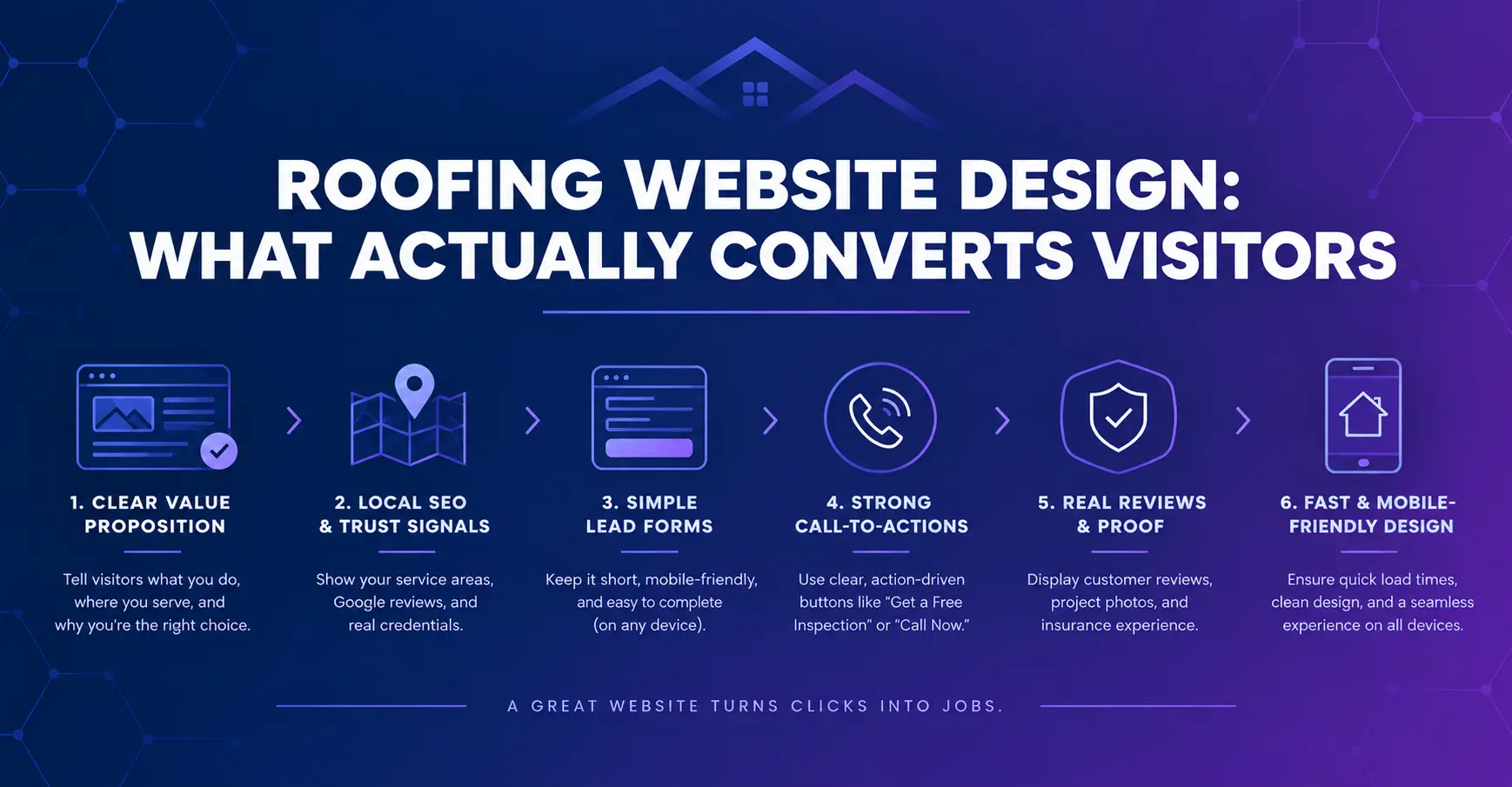
Give visitors an obvious next step. This is the foundation of law firm website optimization.
3. How Can Local SEO Help Lawyers Get More Clients?
For many law firms, geography matters.
A person searching for an attorney usually wants someone licensed and available to serve their jurisdiction. That’s why local SEO for lawyers deserves serious attention.
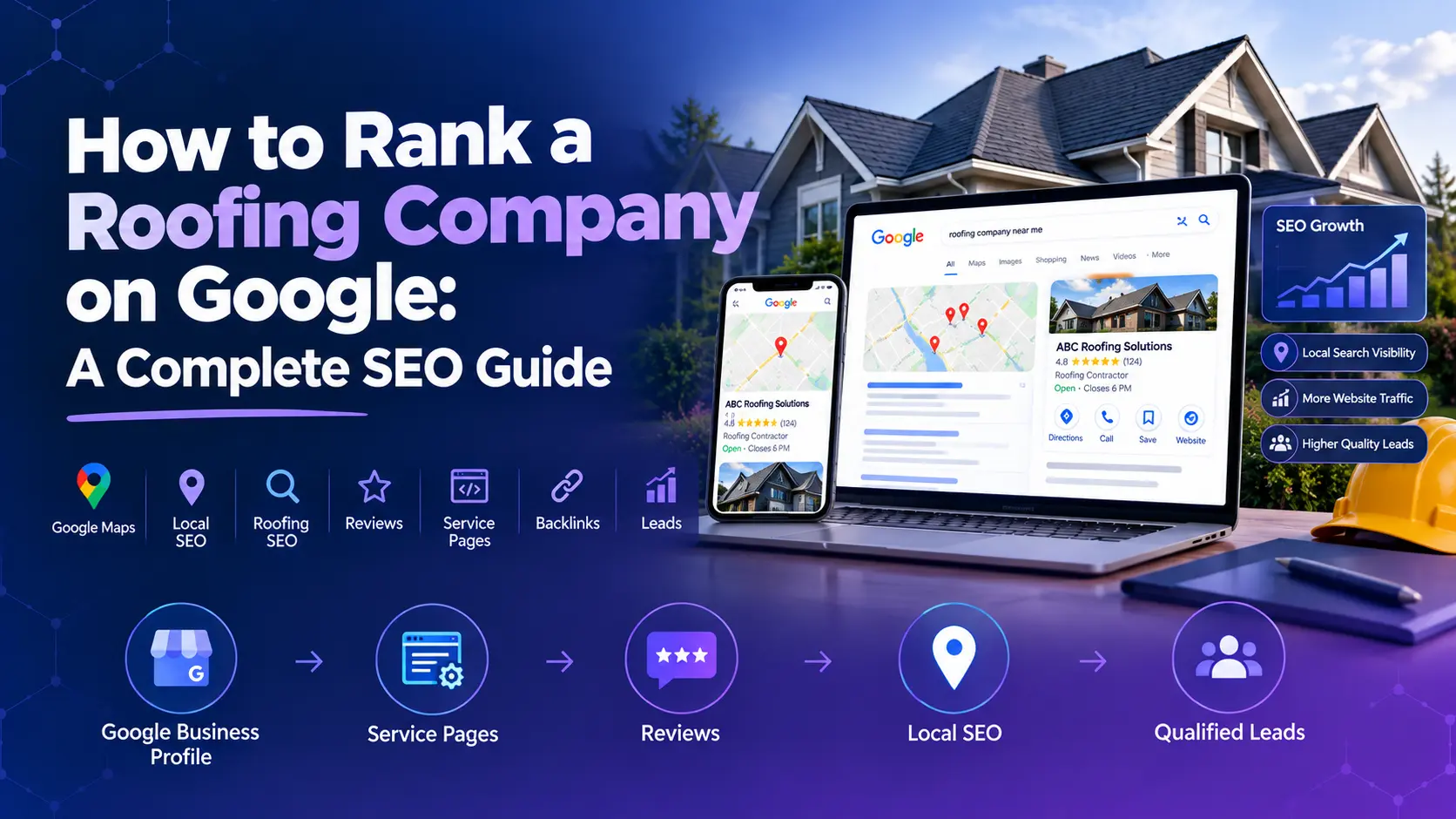
Your strategy should include your website, relevant local pages, business information, reviews, citations, and your Google Business Profile, where eligible.
Google’s guidelines require businesses to represent themselves accurately and maintain accurate location or service-area information. The guidelines also specifically address individual practitioners such as lawyers.
How Should You Optimize Your Google Business Profile?
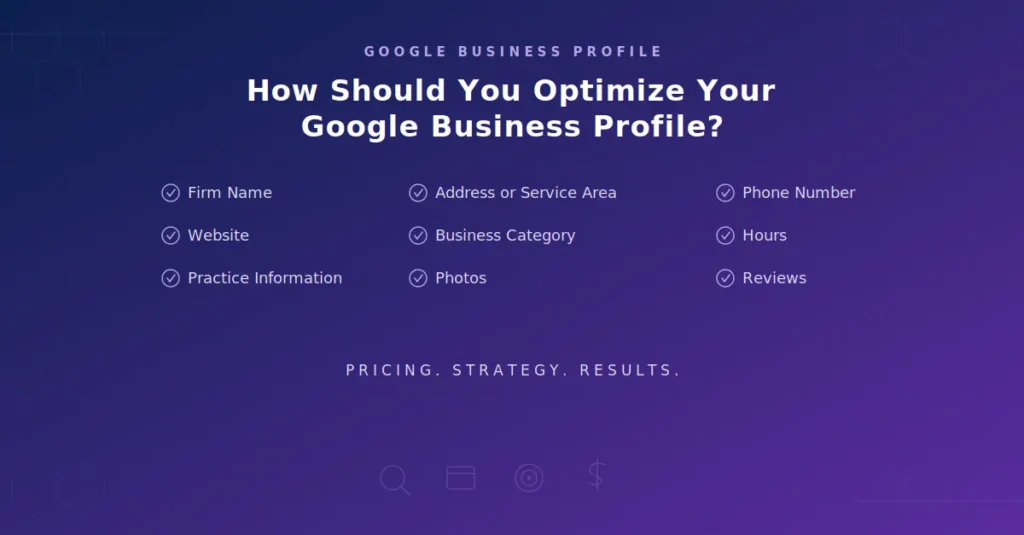
Where eligible, make sure your firm’s information is accurate and consistent.
Pay attention to:
Firm name
Address or service area
Phone number
Website
Business category
Hours
Practice information
Photos
Reviews
Don’t stuff keywords into your business name or create unnecessary duplicate profiles. Accuracy matters.
How Can You Build Location-Relevant Content?
Instead of publishing generic city pages with almost identical text, create genuinely useful local resources.
For example:
Divorce Lawyer in Dallas
could include information about the local legal process, relevant court resources, common client questions, and the firm’s service area. The goal is not to manufacture pages.
It’s to become genuinely useful to people in the market you serve.
4. How Can Legal Content Marketing Help You Get More Clients?
A person facing a legal problem often has dozens of questions. Your law firm content marketing strategy should answer them before they ever contact you. That’s powerful because education can reduce uncertainty.
Imagine two firms.
Firm A
Homepage → “Call us today.”
Firm B
Homepage → Guides → Practice areas → Attorney profiles → FAQs → Reviews → Consultation
Firm B gives the prospect more reasons to trust the business. That’s why legal content marketing isn’t simply about publishing blog posts. It’s about demonstrating expertise.
What Content Formats Should Lawyers Consider?
A law firm can publish:
Legal guides
FAQs
Case explainers
Practice-area articles
Local legal resources
Videos
Webinars
Attorney interviews
Checklists
Process explainers
Myth-vs-fact articles
The most valuable topics are usually those connected to actual client questions.5
5. How Can Referrals Help a Law Firm Get More Clients?
Not every client needs to come from Google. Referrals can be extremely valuable because trust is transferred from one relationship to another. That’s why law firm referral marketing should remain part of your strategy.
Potential referral sources can include:
Other attorneys
Accountants
Financial professionals
Business owners
Community organizations
Former clients
Professional associations
Complementary service providers
But there’s an important distinction.
Don’t approach relationships with:
“Send me clients.”
Build relationships first.
Provide value.
Share useful resources.
Make thoughtful introductions.
Stay in touch.
Become known for a particular area of law.
How Can You Create a Referral-Friendly Experience?
Your existing clients and professional network need to know:
Who you help
What cases do you handle
Where you practice
When they should refer someone
The more clearly you communicate your niche, the easier it becomes for others to remember you.
6. How Can Reviews Become a Reputation Asset for Your Law Firm?
When someone is choosing a lawyer, trust matters. Online reviews can influence whether a potential client feels comfortable taking the next step. That’s why law firm reputation management deserves a structured process.
Your firm should monitor:
Google reviews
Legal directories
Social platforms
Relevant third-party profiles
Attorney directories
Don’t manufacture reviews. Don’t pressure clients into saying something untrue. And don’t assume every jurisdiction treats testimonials and endorsements identically. Legal advertising rules can impose additional requirements depending on the jurisdiction.
How Should You Ask for Reviews?
A satisfied client may be more receptive to leaving feedback after a positive milestone or completed matter, subject to applicable ethical and privacy requirements.
The process should be simple and never expose confidential client information merely to create marketing content.
7. How Can Social Media Help a Law Firm Get More Clients?
Law firm social media marketing can work, but only when you treat social platforms as relationship channels rather than vanity-metric machines. You don’t need millions of followers.
You need the right audience to recognize your expertise.
What Content Ideas Work for Lawyers?
You could explain:
Common legal misconceptions
Recent legal developments
Frequently asked client questions
Basic legal processes
What someone should prepare before a consultation
How your practice area works
Attorney commentary on public legal issues
Behind-the-scenes firm culture
The goal isn’t to provide individualized legal advice through a social post. It’s to educate and demonstrate competence.
How Can Lawyers Use Video?
Short videos can answer questions quickly.
For example:
“Three things to bring to your first immigration consultation.”
Or:
“What should you do immediately after a car accident?”
These topics can later become:
Blog posts
YouTube videos
FAQs
Social posts
Email content
One useful idea can become an entire content cluster.
8. How Can You Improve Your Law Firm Website Conversion Rate?
SEO can bring someone to your website. But legal website conversion determines what happens next. This is where many firms lose potential clients.
A visitor lands on the page. They don’t know what to do.
They leave.
How Can Your Website Make the Next Step Obvious?
A good law firm call to action could be:
Schedule a Consultation
Request a Case Evaluation
Speak With an Attorney
Book a Consultation
Call the Office.
The exact wording should reflect the firm’s actual process and comply with applicable advertising rules.
How Can You Make Your Contact Form Easier?
Long forms can create friction. For an initial inquiry, only request information your firm actually needs.
For example:
Name
Contact information
Practice area
Brief description
Then gather additional information through your normal legal client intake process.
9. How Can You Build a Legal Lead Funnel?
A law firm lead funnel connects all your marketing channels.
Here’s a simple example:
Google Search
↓
Practice-Area Page
↓
Helpful FAQ
↓
Attorney/Trust Information
↓
Consultation CTA
↓
Law Firm Intake Form
↓
Follow-Up
↓
Consultation
The funnel can also start elsewhere.
Social Media Funnel
Social post → Educational page → Practice area → Consultation
Referral Funnel
Referral → Firm website → Attorney profile → Consultation
Paid Search Funnel
Google Ad → Dedicated landing page → Call/Form → Intake
The important point is that every channel should have a destination.
Don’t send every visitor to your homepage.
10. How Can Google Ads Help a Law Firm Get More Clients?
SEO is powerful, but it takes time. Law firm advertising through paid search can help firms reach high-intent prospects more quickly.
For example, someone searching:
“criminal defense lawyer near me”
Has a different intent from someone searching:
“What is criminal defense?”
Paid campaigns should reflect those differences.
SEO vs. Paid Advertising
| Factor | SEO | Paid Search |
| Speed | Slower | Faster |
| Long-term asset | Strong | Limited without ongoing spend |
| Cost model | Investment in content/technical work | Pay per click/impression depending on the campaign |
| Control | Moderate | High |
| Sustainability | Can compound | Stops when campaigns stop |
| Best use | Long-term visibility | Capturing immediate demand |
I generally don’t recommend choosing one blindly. A mature legal marketing strategy can use both.
11. How Can Better Attorney Profiles Help You Get More Clients?
Your attorney bio shouldn’t read like a résumé copied onto a website.
Potential clients want to know:
Who are you?
What do you handle?
Where do you practice?
What experience is relevant to my situation?
What can I expect from working with you?
Your profile should communicate relevant expertise without exaggeration.
Include verifiable information about:
Education
Bar admissions
Practice areas
Professional memberships
Relevant experience
Publications
Speaking
Community involvement
Where appropriate. Again, accuracy matters. Don’t use vague superlatives such as “best lawyer” unless the claim is legitimately substantiated and permitted under applicable rules.
12. How Can Topic Clusters Help an Attorney Get More Clients?
One of my favorite attorney SEO strategies is building topical depth. Suppose you represent personal injury clients. Instead of publishing random legal articles, build a cluster.
Pillar Page
Personal Injury Lawyer Guide
Supporting Content
What should I do after a car accident?
How does a personal injury claim work?
What damages can potentially be claimed?
How long does a personal injury case take?
What evidence should I preserve?
When should I contact an attorney?
Then connect those pages through internal links. This helps users move from basic questions toward deeper information. It also creates a stronger topical structure for search engines.
13. How Can AI Search and AEO Help Law Firms Get More Clients?
The search journey isn’t limited to traditional blue links anymore. People increasingly ask conversational systems questions such as
“What should I do after being injured in a car accident?”
“How do I choose a family lawyer?”
“What documents should I bring to an immigration consultation?”
This creates an opportunity for Answer Engine Optimization (AEO) and Generative Engine Optimization (GEO).
Your content should provide clear answers.
Use:
Question-based headings
Concise definitions
Step-by-step explanations
Tables where appropriate
Original insights
Expert authorship
Clear sources
Relevant internal links
Structured data where appropriate
Don’t create content specifically to manipulate AI systems. Create content worth citing. That’s a much stronger long-term strategy.
14. How Can You Make Your Legal Content Demonstrate Real Expertise?
AI can generate generic legal explanations in seconds. That’s exactly why generic legal content is becoming less valuable. Your advantage is experience.
If ethically and legally appropriate, demonstrate:
How attorneys approach common problems
What clients frequently misunderstand
What evidence matters?
What questions clients should ask
How procedures differ by jurisdiction
What mistakes can create complications?
This makes your content more useful. Your firm’s lawyers should have a visible role in the content process. For legal topics especially, accuracy and jurisdictional context matter.
15. How Can Email Nurturing Help a Law Firm Get More Clients?
Not every website visitor is ready to hire a lawyer today. That’s normal.
Someone might be researching a problem for several weeks. An ethical, permission-based legal marketing funnel can help maintain the relationship.
For example:
Day 1: Educational guide
Day 4: Common mistakes to avoid
Day 8: Frequently asked questions
Day 14: Explanation of the consultation process
Day 21: Relevant legal resource
The exact cadence should fit your practice and comply with privacy, advertising, solicitation, and communications rules. The goal isn’t to spam. It’s to remain useful.
16. How Can You Improve Your Law Firm Intake Process?
Generating leads is only half the job. If your firm responds slowly or makes the intake process difficult, marketing performance suffers. Imagine spending $5,000 on advertising and generating 100 inquiries.
If the intake process is chaotic, the marketing campaign may appear unsuccessful even though it generated demand.
Track:
Speed to response
Contact rate
Qualified lead rate
Consultation booking rate
Show-up rate
Retainer rate
Cost per qualified lead
Cost per retained client
This transforms law firm lead generation from a marketing activity into a measurable business system.
Which Client-Acquisition Strategies Should a Law Firm Prioritize?
Not every firm should launch ten channels simultaneously. I’d prioritize based on your situation.
| Strategy | Time to Results | Long-Term Value | Cost | Best For |
| SEO | Medium/Slow | High | Medium | Sustainable organic growth |
| Local SEO | Medium | High | Low–Medium | Local firms |
| Content marketing | Medium | High | Medium | Authority building |
| Referrals | Medium | High | Low–Medium | Established relationships |
| Paid search | Fast | Medium | High | High-intent demand |
| Social media | Medium | Medium | Low–Medium | Brand familiarity |
| Medium | High | Low | Nurturing prospects | |
| Networking | Medium | High | Low–Medium | Relationship-driven growth |
| Reviews | Medium | High | Low | Trust and reputation |
The strongest strategy is usually a combination rather than a single tactic.
What Doesn’t Work Well for Law Firm Client Acquisition?
A strong marketing plan should also recognize what can waste money.
Buying Low-Quality Leads
Cheap leads aren’t necessarily good leads.
If they’re shared with multiple firms, poorly qualified, or unrelated to your practice area, your team may spend more time filtering than converting.
Keyword Stuffing
Repeating “best lawyer” dozens of times doesn’t create authority.
It creates poor content.
Generic AI Content
Publishing hundreds of pages with no original insight can weaken your brand rather than strengthen it.
Fake Reviews
This creates ethical and reputational risks.
Overpromising Results
Legal outcomes depend on facts, law, procedure, evidence, and many other variables.
Marketing should never imply guaranteed results when the claim isn’t supportable.
Ignoring Intake
Generating leads that nobody follows up with quickly is an expensive mistake.
Pros and Cons of Getting Clients Without Cold Calling
Pros
Intent-driven: SEO and search advertising can reach people actively looking for legal information.
Scalable: Content and search visibility can continue attracting visitors without one-to-one outreach.
Trust-building: Educational content allows prospects to evaluate your expertise before contacting you.
Measurable: Digital channels can be tracked from traffic through consultation and, where systems permit, retained matters.
Diversified: Your firm isn’t dependent on one source of business.
Cons
SEO takes time: Organic visibility rarely appears overnight.
Content requires expertise: Legal content needs careful review.
Competition can be intense: competitive practice areas often have expensive search markets.
Compliance matters: Lawyer advertising rules vary by jurisdiction.
Conversion still requires people: a great website can’t replace effective intake and client communication.
How to Get More Clients as a Law Firm: A 90-Day Action Plan
If I were starting with a firm that had limited digital visibility, I wouldn’t attempt everything simultaneously. I’d use a phased approach.
Days 1–30: Build the Foundation
Audit the website.
Identify the firm’s highest-value practice areas.
Research client search intent.
Review competitors.
Optimize core practice-area pages.
Fix technical SEO problems.
Verify local business information.
Review conversion paths.
Set up accurate analytics and conversion tracking.
Days 31–60: Build Authority
Create priority content clusters.
Publish useful FAQs.
Improve attorney profiles.
Develop location-relevant resources.
Strengthen internal links.
Build a review and reputation process.
Develop referral relationships.
Create useful social content from existing expertise.
Days 61–90: Scale What Works
Review organic traffic.
Analyze qualified leads.
Identify high-converting pages.
Improve underperforming CTAs.
Test landing pages.
Evaluate paid search opportunities.
Review intake performance.
Double down on the channels producing qualified consultations.
This is how you turn law firm client growth into a process rather than a guessing game.
Law Firm Client Acquisition Checklist
- Define your highest-value practice areas.
- Identify your ideal client and location.
- Research client search intent.
- Audit your law firm website.
- Create dedicated practice-area pages.
- Optimize your Google Business Profile where eligible.
- Improve local SEO.
- Build useful legal content clusters.
- Optimize attorney profiles.
- Create clear calls to action.
- Simplify initial contact forms.
- Track consultation requests.
- Monitor qualified leads.
- Build a referral system.
- Encourage appropriate client feedback and reviews.
- Develop a social media content strategy.
- Consider paid search for high-intent queries.
- Create permission-based follow-up campaigns.
- Review your intake process.
- Measure cost per qualified lead.
- Measure consultation-to-client conversion.
- Review marketing compliance regularly.
Frequently Asked Questions
How Can a Law Firm Get More Clients Without Cold Calling?
A law firm can attract clients through SEO, local search, useful legal content, referrals, reviews, social media, paid search, networking, and a conversion-focused website. The best combination depends on the firm’s practice area, market, budget, competition, and ability to handle new inquiries.
What Is the Best Way to Get Legal Clients Online?
There isn’t one universal channel. For many firms, a combination of law firm SEO, local SEO, high-quality practice-area pages, useful content, reviews, and strong website conversion paths can create a sustainable source of qualified legal leads.
How Does SEO Help Law Firms Get Clients?
Law firm SEO helps a firm appear when people search for legal services and answers. By targeting relevant practice areas, locations, and questions, a firm can attract prospects who are already researching a legal problem and potentially move them toward a consultation.
How Can Lawyers Get More Clients From Google?
Lawyers can improve their visibility through local SEO, useful practice-area content, technically sound websites, accurate business information, relevant reviews, and authoritative resources. Paid search can complement organic visibility when the firm wants to capture high-intent searches more quickly.
Is Cold Calling Necessary for Law Firm Growth?
No. Cold calling is only one possible business-development method. Law firms can also grow through search visibility, referrals, networking, content marketing, reputation management, paid advertising, and strong client-intake systems. Applicable professional-conduct rules should guide any solicitation activity.
How Important Is a Law Firm’s Website for Client Acquisition?
A law firm’s website often serves as a prospect’s evaluation point after discovering the firm elsewhere. Clear practice areas, attorney information, trust signals, helpful content, mobile usability, and simple consultation paths can make the difference between a visitor and a potential client.
What Type of Content Should a Law Firm Publish?
Focus on genuine client questions. Useful formats include legal guides, FAQs, process explanations, practice-area resources, local legal information, videos, checklists, and myth-versus-fact articles. Content should be accurate, jurisdictionally appropriate, and reviewed according to the firm’s standards.
How Can a Law Firm Generate Qualified Leads?
Start by targeting high-intent searches and audiences that match your practice areas. Then create relevant landing pages, clear calls to action, accurate messaging, and an efficient intake process. Measure qualified consultations rather than judging marketing solely by clicks or website traffic.
Are Google Reviews Important for Law Firms?
Reviews can influence how potential clients perceive a firm, particularly when people are comparing local providers. However, lawyers must follow applicable professional-conduct, confidentiality, privacy, and platform rules when requesting, responding to, or displaying reviews.
How Long Does Law Firm SEO Take to Produce Results?
SEO results vary significantly based on competition, location, website authority, content quality, technical condition, and practice area. Some improvements may produce relatively quick gains, while competitive organic rankings can require sustained effort over many months.
Can AI Help Law Firms Get More Clients?
AI can support research, content workflows, analysis, personalization, and marketing operations, but it shouldn’t replace professional legal judgment or appropriate content review. For legal marketing, accuracy, confidentiality, ethical compliance, and genuine expertise remain essential.
Final Thoughts: Build a System That Attracts Clients Instead of Chasing Them
If you’re wondering how to get more clients as a law firm without cold calling, start by changing the question.
Don’t ask:
“How can we contact more people?”
Ask:
“How can we become visible when the right people are already looking for help?”
That’s the fundamental difference between interruption-based marketing and intent-based legal client acquisition.
Your firm can build visibility through SEO. You can demonstrate expertise through content. You can build trust through reputation and authentic attorney profiles. You can strengthen local discovery through local SEO.
You can generate immediate demand through carefully managed paid advertising. You can expand your network through referrals.
And you can convert that attention through a better law firm website, clearer calls to action, and a more efficient intake process. The goal isn’t to eliminate every traditional marketing method.
It’s to build a diversified acquisition engine that doesn’t depend entirely on cold outreach. If I were advising a law firm today, I’d start with three priorities:
Own the searches your ideal clients are already making.
Build content that genuinely answers their questions.
Create a website and intake experience that makes taking the next step easy.
Do those three things consistently, measure qualified leads rather than vanity metrics, and your firm can create a much more sustainable path toward law firm growth—without making cold calling the center of your marketing strategy.